Vanilla Gluten-Free Cake Recipe (Moist, Fluffy, From Scratch)
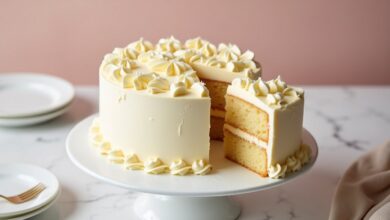
This vanilla gluten-free cake is a from-scratch butter cake made with a 1:1 gluten-free flour blend. It bakes up soft and even, with a fine, tender crumb that does not taste gritty, and it works as two 8-inch layers, one 9×13-inch sheet cake or 24 cupcakes. Every quantity is given in US cups and grams, so you can weigh the flour for the most reliable result.
- Vanilla gluten-free cake recipe
- Why these gluten-free swaps work
- Pan sizes and bake times
- Gluten-free vanilla buttercream
- Dairy-free, lower-sugar and almond flour versions
- Troubleshooting
- Storage and freezing
- FAQ
Vanilla Gluten-Free Cake Recipe
Yield: two 8-inch (20 cm) round layers, about 12 slices · Oven: 350°F (175°C) · Prep: 20 minutes + 15 minutes batter rest · Bake: 30–35 minutes · Total: about 1 hour 10 minutes, plus cooling
Ingredients
- 2 1/2 cups (350 g) gluten-free 1:1 baking flour blend that contains xanthan gum
- 1 tsp (3 g) xanthan gum, only if your blend does not already contain it
- 2 1/2 tsp (10 g) baking powder (check that it is labeled gluten-free)
- 1/2 tsp (3 g) baking soda
- 3/4 tsp (4 g) fine salt
- 3/4 cup (170 g) unsalted butter, softened to about 65°F (18°C)
- 1/4 cup (60 ml / 50 g) neutral oil, such as canola or sunflower
- 1 1/2 cups (300 g) granulated sugar
- 4 large eggs (about 200 g without shells), at room temperature
- 1 tbsp (15 ml) pure vanilla extract
- 1 cup + 2 tbsp (270 ml) buttermilk, at room temperature (or 1 cup + 2 tbsp milk with 1 tbsp lemon juice, rested 5 minutes)
Method
- Prepare. Heat the oven to 350°F (175°C) with a rack in the center. Grease two 8-inch round pans, line the bottoms with parchment and grease the parchment.
- Whisk the dry ingredients. In a bowl, whisk the flour blend (plus xanthan gum if needed), baking powder, baking soda and salt for 30 seconds so the leaveners are evenly spread.
- Cream. Beat the butter, oil and sugar with a mixer on medium-high for 3–4 minutes, until pale and fluffy. Scrape the bowl.
- Add the eggs. Beat in the eggs one at a time, about 20 seconds each, then the vanilla. The mixture may look slightly curdled; it smooths out once the flour goes in.
- Alternate flour and buttermilk. On low speed, add one third of the dry mix, then half the buttermilk, then another third of the dry mix, the rest of the buttermilk and the last of the dry mix. Mix until no dry streaks remain, then beat on medium for 20 seconds. Gluten-free batter cannot become tough from mixing, and this short beat makes it smoother.
- Rest the batter. Divide it between the pans (about 600 g each) and let them sit for 15 minutes while the oven finishes heating. This lets the rice and starch flours absorb liquid, which removes grittiness.
- Bake for 30–35 minutes, until the tops spring back, the edges pull away from the pan and a toothpick in the center comes out clean. The center should read 205–210°F (96–99°C) on an instant-read thermometer.
- Cool. Leave the layers in the pans for 15 minutes, then turn them out onto a rack and cool completely, about 1 hour, before frosting. Gluten-free cake is fragile while warm and firms up as it cools.
Why These Gluten-Free Swaps Work
- A 1:1 blend instead of a single flour. Blends combine rice flour (structure), potato or tapioca starch (softness) and xanthan gum (binding). One flour alone, such as rice flour, bakes dry and crumbly.
- Xanthan gum replaces gluten’s stretch. It holds the gas from the baking powder so the cake rises and slices without crumbling. About 1/2 tsp per cup of flour is right for cake; more makes it gummy.
- Butter plus a little oil. Butter gives flavor and lift from creaming; the oil stays liquid at room temperature, so the cake stays moist for days instead of firming up like an all-butter cake.
- Buttermilk. Its acid reacts with the baking soda for extra rise and softens the crumb. Gluten-free flours also need a little more liquid than wheat flour, which is why this recipe uses 270 ml instead of the usual 240 ml.
- Four eggs. Egg proteins set in the oven and give the structure that gluten would normally provide.
- Weighing the flour. Cup weights of gluten-free blends vary from about 130 g to 150 g. Weighing 350 g removes the most common cause of a dry or dense gluten-free cake.
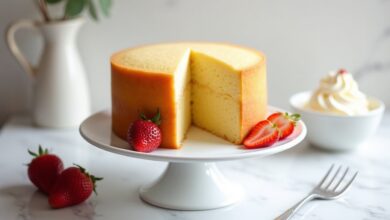
Expect a crumb that is slightly more tender and a little less springy than a wheat cake, with a golden top and a clean vanilla flavor.

Pan Sizes and Bake Times
| Pan | Batter | Temperature | Bake time |
|---|---|---|---|
| Two 8-inch (20 cm) rounds | about 600 g each | 350°F (175°C) | 30–35 min |
| Two 9-inch (23 cm) rounds | about 600 g each | 350°F (175°C) | 25–30 min |
| Three 6-inch (15 cm) rounds | about 400 g each | 350°F (175°C) | 25–30 min |
| One 9×13-inch (23×33 cm) pan | all | 350°F (175°C) | 32–38 min |
| 24 cupcakes | about 50 g each (2/3 full) | 350°F (175°C) | 18–22 min |
Gluten-Free Vanilla Buttercream
This amount fills and covers two 8-inch layers or pipes 24 cupcakes.
- 1 cup (226 g) unsalted butter, softened
- 4 cups (480 g) powdered sugar, sifted (check the label; most US powdered sugar uses cornstarch, which is gluten-free, but look for a gluten-free claim if cross-contact matters to you)
- 3–4 tbsp (45–60 ml) heavy cream or milk
- 2 tsp (10 ml) vanilla extract and a pinch of salt
Beat the butter for 2 minutes until pale, add the powdered sugar on low, then the vanilla, salt and cream. Beat on medium-high for 3 minutes until fluffy. For a tangier finish, use our cream cheese icing; for a thin drizzle, a powdered sugar glaze.

Dairy-Free, Lower-Sugar and Almond Flour Versions
- Dairy-free vanilla gluten-free cake: use 3/4 cup (170 g) plant-based butter sticks (not tub spread, which is too soft) and 1 cup + 2 tbsp (270 ml) oat or soy milk mixed with 1 tbsp lemon juice. Frost with dairy-free butter and plant milk in the buttercream above.
- Lower-sugar version: replace half the sugar (3/4 cup / 150 g) with a 1:1 granulated erythritol or allulose sweetener. Sugar also keeps cake moist, so expect a slightly drier, firmer crumb; allulose browns faster, so bake at 325°F (165°C) for 35–40 minutes. Our homemade sugar-free yellow cake mix goes further, with no added sugar. This is general baking information, not dietary advice.
- Almond flour boost: swap 1/2 cup (70 g) of the flour blend for 2/3 cup (64 g) fine blanched almond flour. The extra fat gives a moister, slightly denser crumb and a light almond note. The same flour makes our almond flour cheesecake crust.
- No buttermilk: see our buttermilk substitute ratios; plain yogurt thinned 3:1 with milk also works.
Troubleshooting
| Problem | Likely cause | Fix |
|---|---|---|
| Gritty texture | Batter not rested; coarse rice flour | Rest the batter 15–30 minutes; use a blend made with superfine rice flour |
| Dry, crumbly cake | Too much flour (scooped cups) or overbaked | Weigh 350 g; start checking at 28 minutes; pull at 205–210°F (96–99°C) |
| Gummy line at the bottom | Underbaked, extra xanthan gum, or cut while warm | Bake to temperature, skip added xanthan if the blend has it, cool fully |
| Sunken center | Oven door opened early, old baking powder, too much liquid | Keep the door shut for 25 minutes; use fresh baking powder; measure the buttermilk |
| Domed, cracked top | Oven too hot or pan too small | Check the oven with a thermometer; use the pan chart above or cake strips |
| Layers break when turned out | Removed too soon | Cool 15 minutes in the pan, run a knife around the edge, use parchment |
Storage and Freezing
- Room temperature: unfrosted layers wrapped in plastic, or a buttercream-frosted cake under a cake dome, keep for 2 days. Gluten-free cake stales faster than wheat cake once cut, so cover cut sides.
- Refrigerator: up to 5 days (required for cream cheese frosting). Let slices sit at room temperature for 30 minutes before serving so the crumb softens again.
- Freezer: wrap cooled, unfrosted layers in plastic wrap and foil and freeze for up to 3 months. Thaw in the wrapping at room temperature for 2–3 hours, then frost. Chilled layers are also easier to stack and frost.
Looking for more wheat-free bakes? Try our gluten-free cinnamon coffee cake, these gluten-free banana muffins, or browse all of our gluten-free dessert recipes.
Vanilla Gluten-Free Cake FAQ
What is the best flour for a vanilla gluten-free cake?
Why is my gluten-free cake gritty or dry?
Can I make this gluten-free vanilla cake dairy-free?
Can I bake this recipe as gluten-free vanilla cupcakes?
Can I make a vanilla gluten-free cake ahead of time?
Share Your Experience with Our Recipe!
There are no reviews yet. Be the first one to write one.