Powdered Sugar Icing Recipe (Easy 5-Minute Glaze)
Need a smooth, sweet glaze for cookies, cinnamon rolls, donuts, or a loaf cake? This powdered sugar icing recipe uses a few pantry ingredients and takes about five minutes to stir together. It is a pourable glaze, not a fluffy buttercream, and you can adjust its thickness for the dessert you’re decorating.
Quick recipe: Prep 5 minutes · No cooking · Makes approximately 1 cup of icing · Best for cooled baked goods.
Ingredients for powdered sugar icing
- 2 cups (about 240 g) powdered sugar, sifted
- 2 tablespoons (30 ml) milk to start, plus more as needed
- 1/2 teaspoon vanilla extract
- A small pinch of fine salt
Use water or lemon juice in place of milk for a different flavor. Powdered sugar is also called confectioners’ sugar or icing sugar. If you run out, see how to make icing sugar at home.
How to make powdered sugar icing
Step 1: Sift
Sift powdered sugar into a medium bowl to remove lumps before adding liquid.
Step 2: Whisk
Add 2 tablespoons of milk, vanilla, and salt. Whisk until smooth. It may look stiff at first; keep mixing before adding more liquid.
Step 3: Adjust the consistency
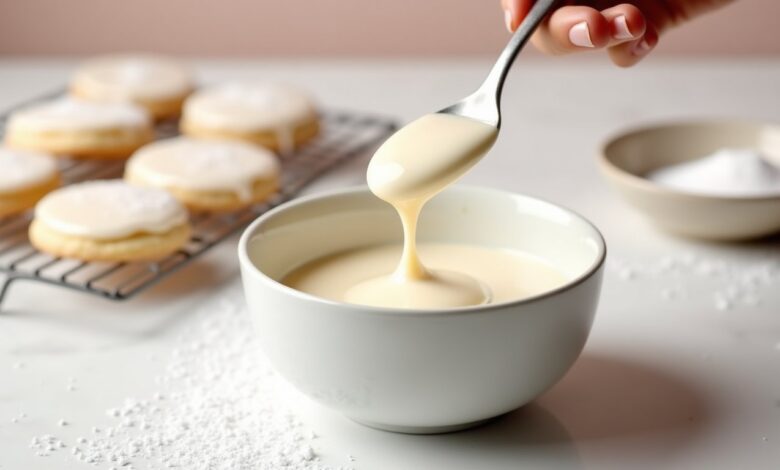
For cookie icing, the glaze should fall from the spoon in a slow ribbon. For a thin cake drizzle, add milk 1 teaspoon at a time until it flows easily. If too thin, whisk in another tablespoon of sifted powdered sugar.
Step 4: Glaze cooled baked goods
Dip cookies or drizzle icing over cooled cakes. Allow the surface to set before serving; drying time varies depending on humidity and thickness.
How much milk do I need?
- Thick spreading glaze: start with 2 tablespoons per 2 cups sugar.
- Ribboning cookie glaze: add a teaspoon or two more if needed.
- Thin drizzle for a loaf cake: gradually add liquid until it runs in a continuous stream.
Measurements can vary with how the sugar was packed. Add liquid slowly, rather than all at once.
Easy flavor variations
- Lemon glaze: replace some milk with lemon juice and add a little zest.
- Orange glaze: add orange juice and finely grated zest.
- Almond glaze: replace vanilla with a few drops of almond extract.
- Chocolate glaze: sift in 1 tablespoon cocoa powder; adjust liquid.
- Maple glaze: substitute a little maple syrup for some of the milk.
Troubleshooting: fix icing texture
Too runny?
Whisk in more powdered sugar, a tablespoon at a time, until it coats the back of a spoon.
Lumpy?
Press the icing through a fine-mesh sieve, or start with sifted sugar next time.
Soaking into the cake?
Your cake may be too warm or your glaze too thin. Cool the cake fully, then slightly thicken the mixture.
Too sweet?
Balance the sweetness with a pinch of salt or lemon juice. For a less sweet topping overall, use a different frosting instead of diluting the glaze.
Storing leftover icing
Refrigerate dairy-based leftover glaze in a covered container promptly. Use within 2–3 days and stir before using. Thin with a few drops of liquid if necessary. Avoid leaving it at room temperature for extended periods.
Frequently asked questions
Can I make powdered sugar icing without milk?
Yes. Water, lemon juice, or orange juice works. Start with a small amount.
Does powdered sugar icing harden?
It generally develops a set surface as it dries, but remains more delicate than royal icing and is less suitable for intricate stacked cookie designs.
What is the difference between icing and frosting?
Simple powdered sugar icing is a sugar-and-liquid glaze used for dipping or drizzling. Buttercream frosting contains fat and is thicker, so it holds piped shapes better.
More baking ideas
Serve this glaze over 3-ingredient shortbread cookies. For a light, marshmallow-like alternative, see our 7-minute frosting recipe. Prefer cocoa flavor? Make our easy chocolate glaze recipe for cakes and donuts.