Light Sponge Cake Recipe: Soft, Fluffy & Easy
A good light sponge cake recipe rises high without needing much added fat. This simple whole-egg sponge depends on the air whipped into eggs and sugar, then held in place by careful folding. It’s an airy base for strawberries and cream, jam, lemon curd, or a decorated layer cake.
Recipe overview: Prep 20 minutes · Bake approximately 23–28 minutes · Cool 1 hour · One 8-inch (20 cm) round cake · Approximately 8 slices · No baking powder required.
Ingredients for light sponge cake
- 4 large eggs, preferably at room temperature (about 200 g without shells)
- 1/2 cup plus 2 tablespoons (120 g) superfine/caster sugar
- 1 cup (120 g) cake flour, sifted (weigh the flour for accuracy)
- 1 teaspoon vanilla extract
- 1/4 teaspoon fine salt
- Optional: powdered sugar and berries for serving
The recipe uses no butter or oil, which creates a light, springy rather than rich, moist crumb. If you prefer a tender butter sponge, look for a génoise or butter-sponge variation instead. The success of this recipe depends on adequately whipped eggs.
Equipment and pan preparation
Use an 8-inch (20 cm) round metal cake pan, electric hand mixer or stand mixer, a large bowl, fine-mesh sieve, and flexible spatula. Preheat the oven to 350°F (175°C). Line the bottom of your pan with parchment; lightly grease if your pan manufacturer requires it, but avoid heavily greasing the sides, which can reduce how an airy sponge climbs.
How to make a light sponge cake
Step 1: Whip whole eggs and sugar
Add the eggs, sugar, vanilla, and salt to a large bowl. Beat on medium-high with an electric mixer for about 8–12 minutes, until pale, thick, and roughly tripled in volume. When you lift the whisk, the mixture should fall in a ribbon that sits on the surface briefly before disappearing. This ribbon stage is essential.
Step 2: Sift the cake flour
Sift the flour before adding it. Sift one-third of the flour directly over the egg mixture, then fold gently using a wide spatula. Repeat in two more additions. Scrape carefully around the sides and bottom to catch dry flour, but stop as soon as no streaks remain.
Step 3: Transfer without knocking out the air
Pour the batter gently into the prepared pan and smooth the top lightly. Do not vigorously tap the pan or overwork the batter; you want to retain the bubbles you just whipped in.
Step 4: Bake until springy
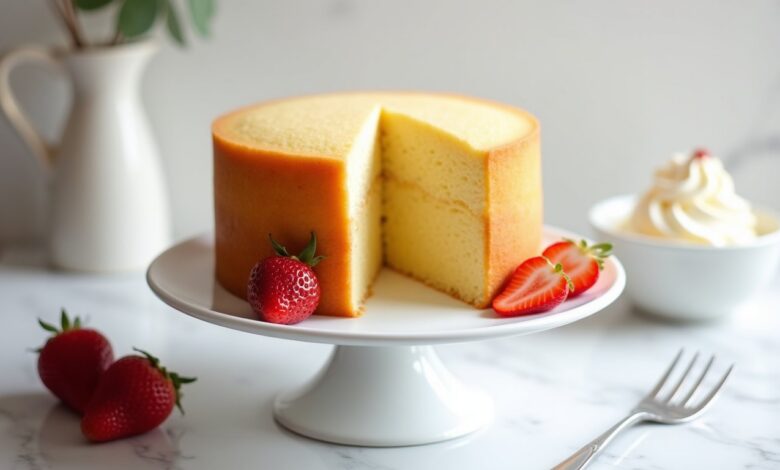
Bake on the middle oven rack for approximately 23–28 minutes. Do not open the oven during the first 20 minutes. The top should be lightly golden, spring back when gently pressed, and a toothpick from the center should come out clean. Oven models and pans vary, so check the cake rather than trusting the clock alone.
Step 5: Cool completely
Let the cake rest briefly in its pan, then run a thin knife around the edges if necessary and turn it out onto a wire rack. Remove the parchment and cool completely before filling or slicing. Use a serrated knife for the cleanest layers.
Why this sponge cake is so light
Whole eggs whipped with sugar trap tiny air bubbles. In the oven, those bubbles expand and the flour and egg proteins set around them. Too much mixing after adding flour collapses the foam, while under-whipping the eggs leaves too little structure. That is why the ribbon stage and gentle folding matter more than adding more baking powder.
How to keep sponge cake from sinking
- Whip the eggs until the mixture is thick enough to hold a ribbon briefly.
- Weigh flour rather than packing it into a measuring cup.
- Fold only until flour disappears; vigorous stirring deflates the batter.
- Bake immediately after mixing and avoid opening the oven too early.
- Check that the center is fully cooked before removing from the oven.
How to serve or fill a sponge cake
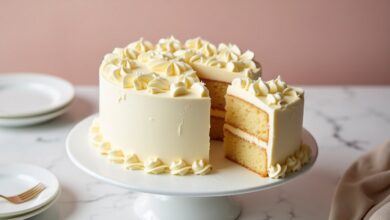
This cake is naturally lighter and less buttery than pound cake. If you’re building a layer cake, brush the slices very lightly with simple syrup to keep them supple, then add whipped cream and berries. For a flavorful middle layer, try homemade strawberry filling for cake. Spoon a little powdered sugar glaze on top for a simple finish.
Easy flavor variations
- Lemon sponge: finely grate the zest of one lemon into the sugar before whipping.
- Orange sponge: add finely grated orange zest in place of lemon.
- Almond sponge: use a few drops of almond extract instead of some vanilla.
- Chocolate sponge: replace about 15 g of the flour with 15 g sifted unsweetened cocoa powder; folding will be slightly more delicate.
Looking for more combinations? Browse our cake flavor guide with frosting and filling pairings.
Troubleshooting your sponge
Why is my sponge dense?
The eggs may not have been whipped long enough, or the batter lost air when the flour was folded in. The ribbon test is a useful clue.
Why is the center sticky or sunken?
The cake may have been underbaked, or the oven door was opened before the center set. Check your oven temperature with a separate oven thermometer if the problem repeats.
Why does my cake taste dry?
Fat-free sponge cake has a lighter, less rich crumb. Overbaking makes it even drier. Use a modest amount of simple syrup or serve with fruit and whipped cream.
Storage
Store an unfilled sponge wrapped airtight at cool room temperature for up to 1–2 days, or freeze tightly wrapped for up to 2 months. Cakes filled with whipped cream, custard, or fresh fruit should be refrigerated promptly and served chilled. Thaw frozen cake while still wrapped to reduce condensation.
Frequently asked questions
Can I use all-purpose flour?
Cake flour produces a finer and more tender crumb, but all-purpose flour can work. Use the same weight and expect a slightly firmer sponge.
Do I need baking powder?
Not for this traditional whole-egg foam sponge. Its lift comes primarily from beaten eggs, so follow the whipping and folding steps carefully.
Can I bake it the day before?
Yes. Wrap the cooled, unfilled cake well and keep it in a cool, dry place until assembly the next day.
What is the best filling for a light sponge?
Light whipped cream, lemon curd, a thin jam layer, or chilled strawberry filling are great choices. Avoid very wet fillings that soak through the crumb.
What to bake next
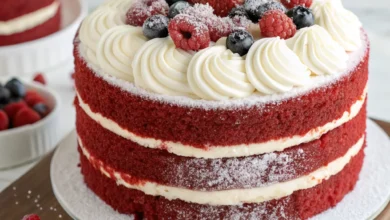
For something richer, compare this airy cake with our chocolate pound cake or red velvet cake. They use different methods and produce very different textures.