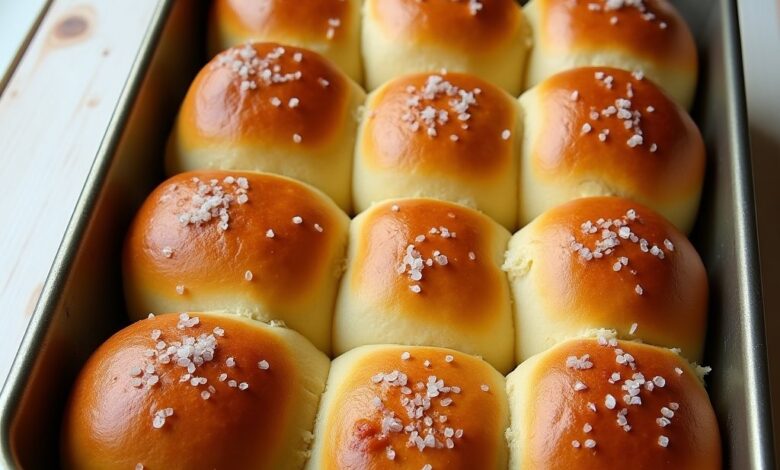
Soft Dinner Rolls Recipe (Fluffy, Buttery Pull-Apart Rolls)
This soft dinner rolls recipe makes 16 fluffy, buttery pull-apart rolls in a 9×13-inch pan. The dough is enriched with warm milk, butter, an egg and a little sugar, which keeps the crumb tender and the tops golden. It uses instant yeast, everyday all-purpose flour and a stand mixer or your hands, and it can be shaped the night before for an easy holiday dinner.
Recipe Overview
- Yield: 16 rolls (about 55 g of dough each)
- Pan: 9×13-inch (23×33 cm) baking pan, metal or glass
- Prep time: 25 minutes (plus 6–8 minutes kneading)
- Rise time: 60–90 minutes first rise + 30–45 minutes second rise
- Bake time: 18–22 minutes
- Oven: 375°F (190°C), rack in the center
- Total time: about 2 hours 45 minutes
Ingredients
Flour is measured by spooning it into the cup and leveling (about 125 g per cup). Weighing is the easiest way to get a soft, not sticky, dough.
For the dough
- 1 cup (240 ml) whole milk, warmed to 105–110°F (40–43°C)
- 2¼ teaspoons (7 g / one ¼-oz packet) instant yeast
- ¼ cup (50 g) granulated sugar
- 1 large egg (about 50 g without shell), at room temperature
- 6 tablespoons (85 g) unsalted butter, very soft
- 1¼ teaspoons (7 g) fine salt
- 3½ cups (438 g) all-purpose flour, plus up to ¼ cup (31 g) more as needed
For the topping
- 2 tablespoons (28 g) unsalted butter, melted
- Flaky salt, about ½ teaspoon (optional)
Need to convert sticks of butter to tablespoons or grams? See our butter conversion chart. Out of whole milk? The swaps in our milk substitutes for baking guide work here; 2% milk gives very similar rolls.
Step-by-Step Instructions
- Warm the milk. Heat the milk until it reaches 105–110°F (40–43°C); it should feel warm, not hot, on your wrist. Milk above 120°F (49°C) can weaken the yeast.
- Mix the dough. In the bowl of a stand mixer, combine the warm milk, yeast, sugar, egg and soft butter. Add the salt and 3 cups (375 g) of the flour. Mix with the dough hook on low speed for 1 minute until a shaggy dough forms.
- Adjust the flour. Add the remaining ½ cup (63 g) flour, then mix on medium-low. If the dough is still sticking to the bottom and sides of the bowl after 2 minutes, add more flour 1 tablespoon (8 g) at a time, up to ¼ cup (31 g). The dough should be soft and slightly tacky, but should pull away from the sides of the bowl.
- Knead. Knead on medium-low for 6–8 minutes (8–10 minutes by hand on a lightly floured counter) until smooth and elastic. A small piece should stretch thin enough to see light through it without tearing.
- First rise. Shape the dough into a ball, place it in a lightly greased bowl, cover and let rise in a warm spot (about 75–80°F / 24–27°C) for 60–90 minutes, until doubled in size.
- Prepare the pan. Grease a 9×13-inch pan with butter or line it with parchment.
- Divide. Press the dough down gently and turn it out onto a clean counter. Divide it into 16 equal pieces of about 55 g each (a scale makes the rolls bake evenly).
- Shape. Flatten each piece slightly, fold the edges into the center, then turn it seam-side down and roll it under a cupped hand on an unfloured counter until it forms a tight, smooth ball. Arrange the rolls in the pan in 4 rows of 4.
- Second rise. Cover and let rise for 30–45 minutes, until the rolls are puffy and touching each other. About 20 minutes into this rise, preheat the oven to 375°F (190°C).
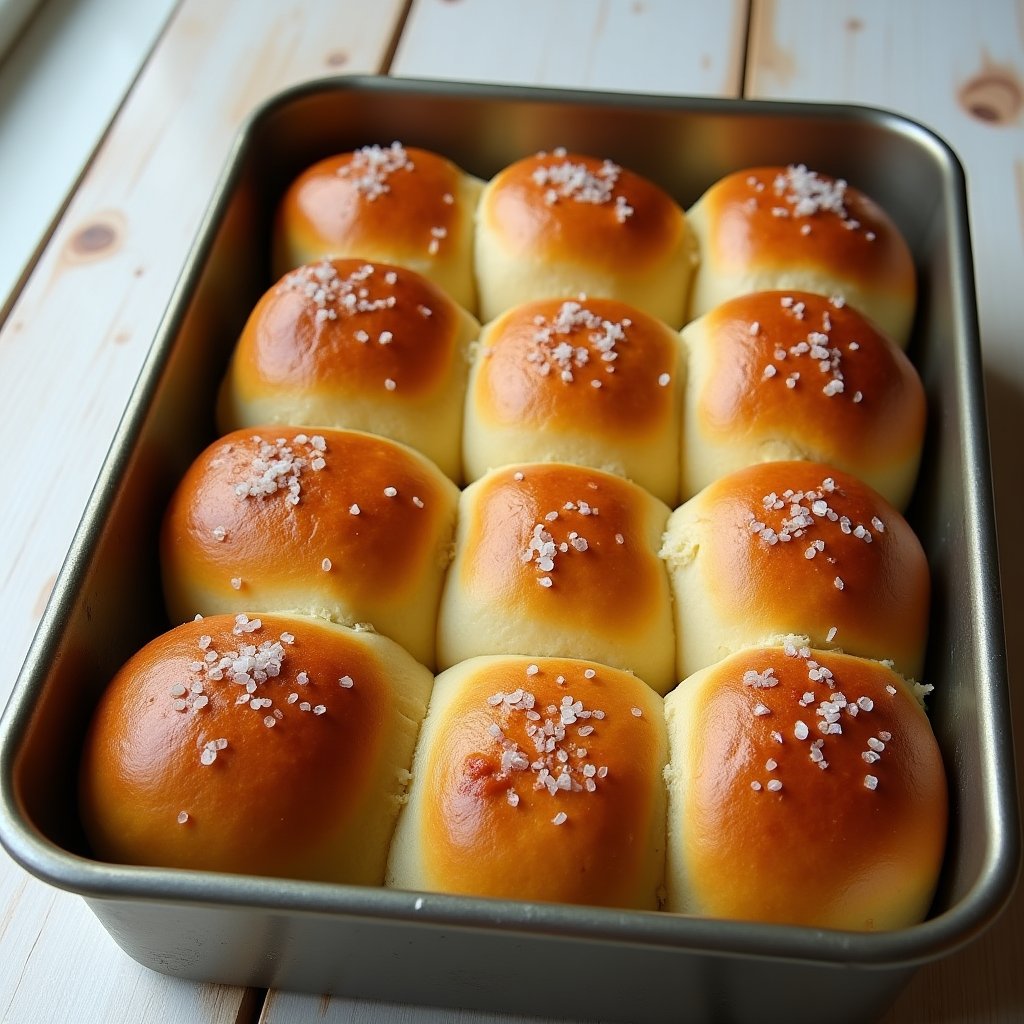
- Bake. Bake for 18–22 minutes, until the tops are deep golden brown and an instant-read thermometer in the center roll reads 190°F (88°C). If the tops brown too quickly, tent loosely with foil for the last 5 minutes.
- Brush with butter. Brush the hot rolls with the melted butter and sprinkle with flaky salt if you like. Cool in the pan for 10 minutes, then serve warm.
Make-Ahead Options
- Overnight in the fridge: shape the rolls, cover the pan tightly and refrigerate for 8–16 hours. Next day, let the pan sit at room temperature for 45–60 minutes until the rolls are puffy, then bake as directed (add 2–3 minutes if they are still cool in the center).
- Freeze unbaked: freeze shaped rolls on a parchment-lined tray until firm, then bag them for up to 1 month. Arrange in the greased pan, cover and thaw in the fridge overnight, then rise 1–2 hours at room temperature and bake.
- Bake ahead: bake fully, cool, wrap and freeze for up to 3 months. Reheat thawed rolls wrapped in foil at 350°F (175°C) for 8–10 minutes.
Planning a holiday menu? These rolls bake while a pie such as our classic pumpkin pie cools, so both can come out of the same oven on the day.
Troubleshooting
- Dough did not rise: the milk was too hot, the yeast was old, or the room is cool. Check the yeast’s date, keep the milk at 105–110°F (40–43°C), and let the dough rise in an oven with only the light switched on.
- Rolls are dense or heavy: too much flour or not enough kneading or rising. Weigh the flour, knead until the dough stretches thin, and wait until it has truly doubled.
- Dough is very sticky: enriched dough is tacky by nature. Knead for the full time before adding flour, then add it only 1 tablespoon at a time. Lightly oiled hands help when shaping.
- Rolls are dry: they were over-baked or over-floured. Pull them at 190°F (88°C) and brush with butter right away.
- Tops are pale but the rolls are done: the oven runs cool or the pan is glass. Move the pan to the upper-middle rack for the last 3–4 minutes, or brush the rolls with a beaten egg before baking next time.
- Rolls are uneven sizes: divide by weight rather than by eye so all 16 rolls bake in the same time.
Storage
Cool completely, then store the rolls in an airtight bag or container at room temperature for up to 2 days. The fridge dries bread out quickly, so freeze anything you won’t eat within 2 days. Refresh room-temperature rolls in a 350°F (175°C) oven for 5 minutes.
FAQs
Can I use active dry yeast instead of instant?
Yes, use the same amount (2¼ teaspoons / 7 g). Stir it into the warm milk with the sugar and let it stand for 5–10 minutes until foamy before adding the other ingredients. Expect the first rise to take 15–30 minutes longer.
Can I use bread flour?
Yes. Use the same weight (438 g). Bread flour absorbs a little more liquid and gives slightly chewier, taller rolls, so you may not need any of the extra flour.
Can I make dinner rolls without a stand mixer?
Yes. Mix the dough in a large bowl with a wooden spoon until shaggy, then knead it by hand on a lightly floured counter for 8–10 minutes until smooth and elastic.
How do I know when dinner rolls are done?
The tops are deep golden, the sides of the center roll spring back when pressed, and the internal temperature reads 190°F (88°C) on an instant-read thermometer.
Can I bake these in a different pan?
Yes. Two 9-inch (23 cm) round cake pans with 8 rolls each work well; bake for 16–20 minutes. For separate rolls with crisp sides, space them 2 inches apart on a parchment-lined baking sheet and bake for 14–17 minutes.