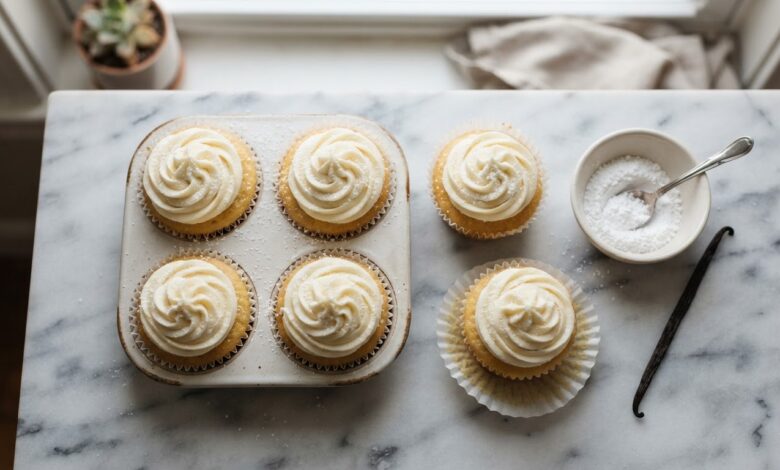
Sugar-Free Frosting: Cream Cheese & Buttercream (Smooth, Not Gritty)
This page gives you two reliable sugar-free frosting recipes: a tangy sugar-free cream cheese frosting and a pipeable sugar-free vanilla buttercream. Both use a powdered sugar substitute, and the sweetener you choose decides whether the frosting is silky or gritty — so that part is explained first.
At a glance: 10 minutes · No cooking · Cream cheese frosting makes about 2½ cups (enough for 12 cupcakes) · Buttercream makes about 3 cups (an 8-inch two-layer cake or 18–24 cupcakes) · Naturally gluten-free.
- Which sweetener to use
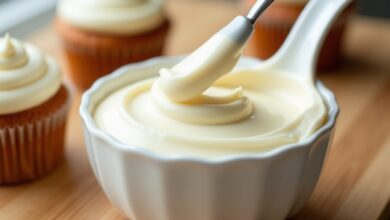
- Sugar-free cream cheese frosting
- Sugar-free buttercream
- Why these swaps work
- Chocolate, whipped and dairy-free variations
- Troubleshooting
- FAQ
Which sweetener makes the best sugar-free frosting?
Always use a powdered (confectioners’-style) sweetener. Granulated crystals won’t dissolve in butter or cream cheese. If you only have granulated, grind it yourself — see how to make sugar-free icing sugar at home.
| Powdered sweetener | Texture in frosting | Taste | Use it for |
|---|---|---|---|
| Allulose | Silky, never gritty; slightly softer | Clean, close to sugar (about 70% as sweet) | Cream cheese frosting, soft swirls |
| Erythritol–monk fruit blend (1:1) | Smooth on day one; can turn grainy in the fridge | Sweet like sugar, light cooling note | Buttercream eaten the same day, crusting frosting |
| Half allulose + half erythritol blend | Smooth and holds piped shapes | Balanced, little cooling | Best all-rounder for both recipes |
| Pure stevia or monk fruit drops | No bulk — frosting stays thin | Can turn bitter | Only a few drops to boost sweetness |
Sugar-free cream cheese frosting
Makes about 2½ cups — enough to swirl 12 cupcakes, or to fill and top (not the sides) an 8-inch two-layer cake.
Ingredients
- 8 oz (226 g) full-fat brick cream cheese, cool from the fridge (not tub-style spread)
- ½ cup (113 g) unsalted butter, softened to about 65°F (18°C)
- 1 cup (about 120 g) powdered allulose or a powdered allulose–erythritol blend
- 1½ teaspoons (7 ml) pure vanilla extract
- ⅛ teaspoon fine salt
- 1–2 tablespoons (15–30 ml) heavy cream, only if needed
Method
- Beat the softened butter on medium speed for 1 minute until creamy.
- Add the cool cream cheese in 4 pieces and beat 30–45 seconds, just until smooth. Over-beating cream cheese makes it runny.
- Sift in the powdered sweetener and salt. Mix on low until combined, then on medium for 30 seconds.
- Add the vanilla. Taste — add 2–4 tablespoons (15–30 g) more sweetener if you want it sweeter (allulose is less sweet than sugar).
- If it’s too stiff, add cream 1 teaspoon at a time. If it’s too soft, chill it for 20–30 minutes and stir.
- Frost only completely cooled cake or cupcakes (room temperature, below about 75°F/24°C).
It’s the sugar-free twin of our classic cream cheese icing and goes well on a homemade sugar-free yellow cake.
Sugar-free buttercream (vanilla)
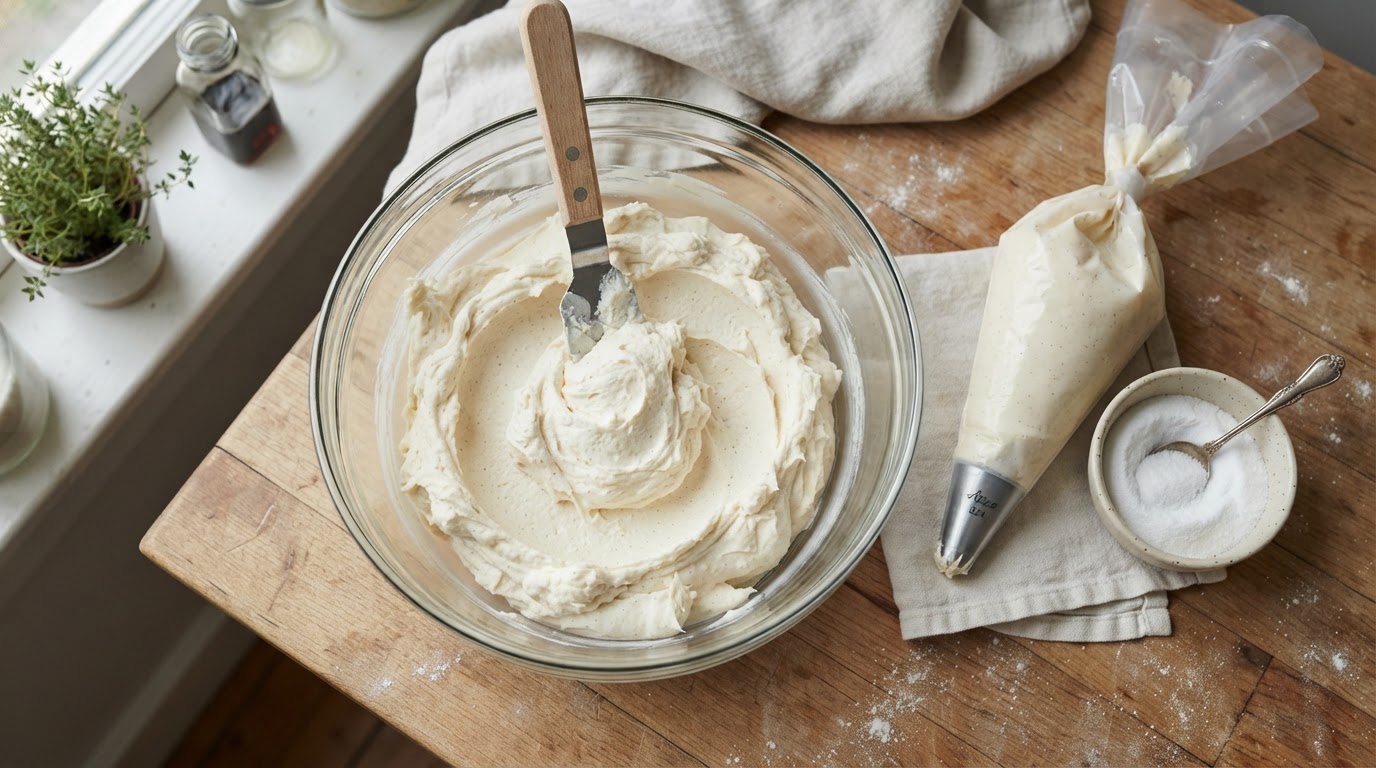
Makes about 3 cups — enough to fill and frost an 8-inch two-layer cake thinly, or pipe 18–24 cupcakes.
Ingredients
- 1 cup (226 g) unsalted butter, softened to about 65°F (18°C)
- 1½ cups (about 180 g) powdered erythritol–allulose or monk fruit–erythritol blend
- 2–3 tablespoons (30–45 ml) heavy cream, room temperature
- 2 teaspoons (10 ml) pure vanilla extract
- ⅛ teaspoon fine salt
Method
- Beat the butter on medium-high for 3–4 minutes until pale and fluffy. This whips in air and makes up for the lighter body of sugar-free sweeteners.
- Sift in the sweetener and salt; mix on low for 30 seconds, then on medium-high for 2 minutes.
- Add the vanilla and 2 tablespoons cream; beat 1 minute. Add the last tablespoon only if you need it softer.
- Rub a little between your fingers: if you feel grains, beat 1 more minute or let it stand 10 minutes and beat again.
Consistency guide for spreading and piping
| Use | Adjust the buttercream |
|---|---|
| Spreading on a sheet cake | Base recipe + 3 tbsp (45 ml) cream |
| Piping swirls and rosettes | Base recipe + 2 tbsp (30 ml) cream; chill 10 min if the edges droop |
| Crumb coat | Take 1 cup out and thin with 1–2 tsp cream |
| Sharp borders and writing | Add 2–3 tbsp (15–22 g) extra powdered sweetener |
Why these sugar-free swaps work
- Powdered sugar does two jobs in frosting: sweetness and bulk/structure. Allulose and erythritol replace both, which is why they work and liquid sweeteners don’t.
- Allulose stays dissolved. It behaves like sugar in the moisture of cream cheese, so the frosting stays smooth for days. It is softer, which is why the cream cheese recipe uses cool cream cheese and a short mix.
- Erythritol recrystallizes. As it cools in the fridge, tiny crystals reform and you taste grit, plus a cooling sensation. That’s useful for a firmer, crusting buttercream, and mixing it with allulose cancels most of both effects.
- Salt and vanilla matter more without sugar: a pinch of salt rounds out the flavor and softens any aftertaste.
- Gluten-free by nature: butter, cream cheese and sweeteners contain no gluten. If a store-bought powdered sweetener includes starch, check it’s labeled gluten-free.
Sugar-free sweeteners can affect people differently, and sugar alcohols such as erythritol may cause digestive discomfort in larger amounts. If you’re managing blood sugar for health reasons, ask your doctor or dietitian which sweeteners suit you.
Variations
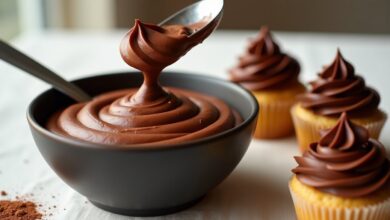
- Sugar-free chocolate frosting: sift ⅓ cup (28 g) unsweetened cocoa powder in with the sweetener in either recipe and add 1 extra tablespoon (15 ml) cream.
- Sugar-free whipped cream frosting: beat 2 oz (57 g) softened cream cheese with 3 tablespoons (about 22 g) powdered sweetener, then slowly add 1 cup (240 ml) cold heavy cream and whip to stiff peaks. Holds 2–3 days in the fridge.
- Lemon: add 1 teaspoon finely grated lemon zest and 2 teaspoons (10 ml) lemon juice to the cream cheese frosting.
- Dairy-free buttercream: use 1 cup (226 g) firm plant-based butter sticks and full-fat canned coconut cream instead of heavy cream; chill 15 minutes before piping.
What to frost with it
Try the cream cheese version on a vanilla gluten-free cake or as a topping for a cheesecake on a gluten-free almond flour crust. For more ideas, see our gluten-free dessert recipes.
Troubleshooting sugar-free frosting
| Problem | Why it happens | Fix |
|---|---|---|
| Gritty texture | Granulated sweetener, or erythritol recrystallized in the fridge | Use powdered sweetener, sift it, switch to allulose or a 50/50 blend; let chilled frosting warm 20 min and re-beat |
| Cooling “minty” aftertaste | Erythritol | Replace half with allulose; add a pinch of salt and extra vanilla |
| Runny cream cheese frosting | Warm or tub cream cheese, over-mixing, too much allulose | Chill 30 min; next time use cool brick cream cheese and mix briefly |
| Buttercream too soft to pipe | Butter too warm or too much cream | Chill 10–15 min, re-beat; add 2–3 tbsp more powdered sweetener |
| Not sweet enough | Allulose/erythritol are about 70% as sweet as sugar | Add 2–4 tbsp more powdered sweetener or 1–2 drops liquid monk fruit |
| Frosting melts off the cake | Cake still warm | Cool cake completely; chill frosted cake 15 min to set |
Storage and make-ahead
- Cream cheese frosting: refrigerate in an airtight container up to 5 days. Frosted cakes go in the fridge; serve after 20–30 minutes at room temperature. Don’t leave it out more than 2 hours.
- Buttercream: room temperature up to 1 day, fridge up to 1 week, freezer up to 3 months. Thaw in the fridge, bring to room temperature and re-beat 1–2 minutes.
- Frostings made only with erythritol may turn slightly grainy after chilling; re-beating at room temperature usually smooths them again.
Sugar-free frosting FAQ
How do you make sugar-free frosting without it being gritty?
Use a powdered sweetener (not granulated), sift it, and choose allulose or an allulose–erythritol blend. Allulose doesn’t recrystallize, so the frosting stays smooth even after chilling.
Can I use granulated Swerve or monk fruit sweetener?
Only after grinding it to a powder in a dry blender for 2–3 minutes and sifting. Unground crystals stay crunchy in frosting.
Is sugar-free frosting keto-friendly?
Both recipes use butter, cream cheese, cream and non-sugar sweeteners, so they’re generally considered keto-friendly. Check the label of your powdered sweetener, since some brands add starch or maltodextrin.
Will sugar-free buttercream crust like regular buttercream?
Erythritol-based buttercream forms a light crust after an hour or two; allulose-based frosting stays soft and slightly tacky. For a crust, use an erythritol or monk fruit–erythritol blend.
How much frosting do I need for a cake?
About 2½ cups for 12 cupcakes, 3 cups for a thinly frosted 8-inch two-layer cake, and 4–4½ cups (1½ batches of buttercream) for a 9-inch two-layer cake with piping.