Brown Sugar Substitute: 8 Easy Swaps + How to Make Brown Sugar
The best brown sugar substitute is the one brown sugar is actually made from: white granulated sugar plus molasses. Stir 1 cup (200 g) granulated sugar with 1 tablespoon (20 g) molasses and you have 1 cup of light brown sugar; use 2 tablespoons (40 g) molasses for dark brown sugar. No molasses? Plain white sugar, coconut sugar, maple syrup and a few other pantry staples also work — each changes the result a little, and the chart below shows exactly how.
Quick Answer: Brown Sugar Substitute Chart (Per 1 Cup Packed Brown Sugar)
One cup of packed brown sugar weighs about 213 g (7.5 oz). Use these amounts to replace it:
| Substitute | Amount for 1 cup brown sugar | Adjustments | Best for |
|---|---|---|---|
| White sugar + molasses (light) | 1 cup (200 g) sugar + 1 tbsp (20 g) molasses | None — closest match | Everything |
| White sugar + molasses (dark) | 1 cup (200 g) sugar + 2 tbsp (40 g) molasses | None | Gingerbread, BBQ sauce, chocolate cake |
| Granulated white sugar only | 1 cup (200 g) | Optional: add 1–2 tbsp (15–30 ml) extra liquid in cakes | Cakes, muffins, quick breads |
| Coconut sugar | 1 cup (about 150–160 g) | Expect a slightly drier, crumblier bake | Cookies, crisps, muffins |
| Light ↔ dark brown sugar | 1 cup packed (213 g) | None; dark gives deeper color and flavor | Everything |
| Muscovado sugar | 1 cup packed (about 213 g) | Stronger molasses flavor; break up lumps | Chewy cookies, sticky toffee, glazes |
| Maple syrup | 3/4 cup (240 ml / 250 g) | Cut other liquid by 3 tbsp (45 ml) | Muffins, quick breads, oatmeal bakes |
| Honey | 2/3 cup (225 g) | Cut liquid by 1/4 cup (60 ml); lower oven 25°F (15°C) | Quick breads, granola, glazes |
| Turbinado or demerara sugar | 1 cup (about 200 g) | Pulse 10–15 seconds in a blender for doughs | Crumb toppings, crisps, sprinkling |
How to Make Brown Sugar at Home
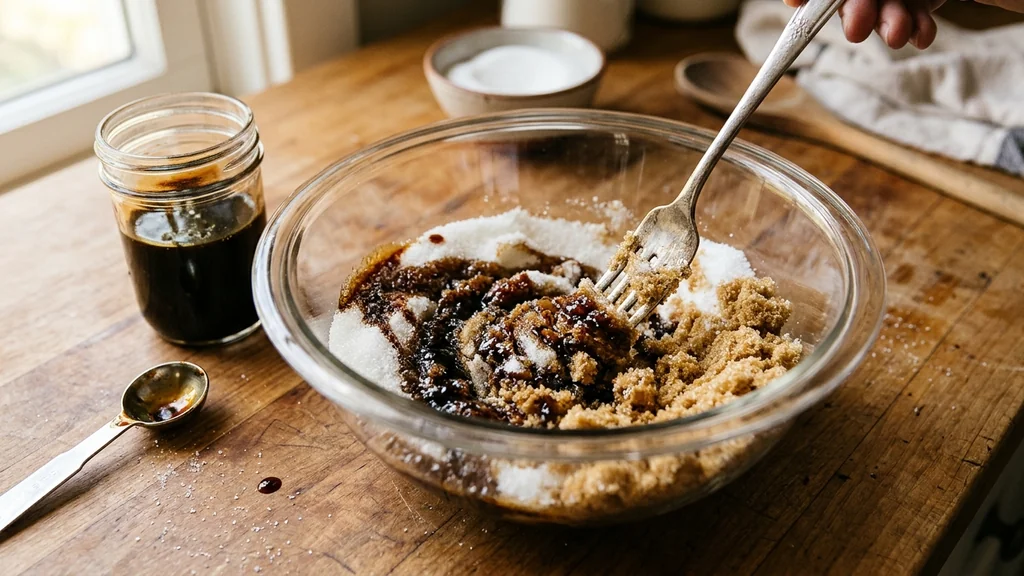
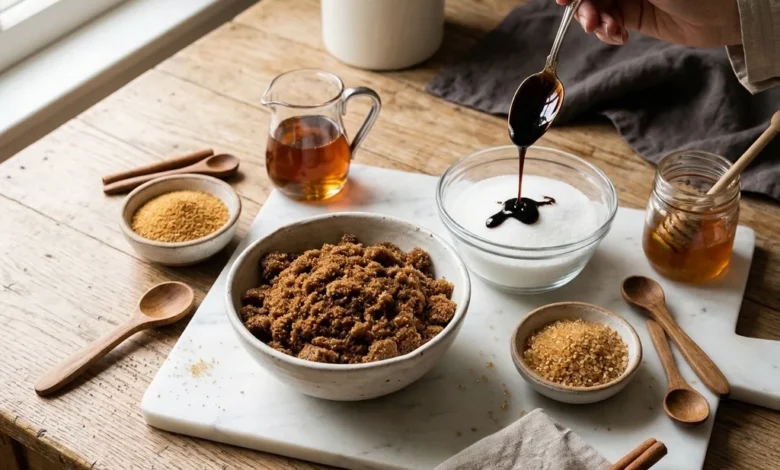
Homemade brown sugar tastes and bakes the same as store-bought because it is the same thing: sugar crystals coated in molasses. Use unsulphured molasses (regular or “mild”); blackstrap is too bitter for this.
Yield: about 1 cup packed (220 g) | Prep time: 5 minutes | Cook time: none
Ingredients
- 1 cup (200 g) granulated white sugar
- 1 tablespoon (20 g) unsulphured molasses for light brown sugar, or 2 tablespoons (40 g) for dark brown sugar
Method
- Put the sugar in a medium bowl and drizzle the molasses over the top. Grease the measuring spoon lightly first so the molasses slides off.
- Mash and stir with a fork for 2–3 minutes, pressing streaks of molasses against the side of the bowl, until the color is even and the sugar feels like damp sand. A hand mixer on low (1 minute) or a food processor (5–6 pulses) is faster.
- Use right away, measuring it packed like store-bought brown sugar, or store it airtight.
Making a big batch? Use 4 cups (800 g) sugar and 1/4 cup (85 g) molasses for light, or 1/2 cup (170 g) for dark.
The Other Swaps, Explained
1. Plain white sugar
Replace brown sugar 1:1 with granulated sugar when you have no molasses. Cakes and muffins barely change, apart from a slightly paler crumb and a less caramel-like flavor. Cookies change most: without the moisture and acidity of molasses they spread a little more and bake up crisper rather than chewy. For chewy cookies, replace only half of the brown sugar with white sugar and keep the rest.
2. Coconut sugar
Coconut sugar has a similar toasty, caramel flavor and swaps 1:1 by volume. It is drier than brown sugar, so cookies can be crumblier and cakes slightly denser. Adding 1 tablespoon (15 ml) of milk or melted butter per cup of coconut sugar helps.
3. Light and dark brown sugar
Light and dark brown sugar are interchangeable cup for cup. Dark brown sugar has about twice the molasses, so it gives a deeper color, a stronger flavor and slightly softer cookies. It is especially good in gingerbread, spice cakes and pecan pie.
4. Muscovado
Muscovado is an unrefined cane sugar with its molasses left in. Use it 1:1 for dark brown sugar. It is moist and clumpy, so press it through a sieve or rub it between your fingers before creaming it with butter.
5. Maple syrup
Use 3/4 cup (240 ml) maple syrup for every 1 cup brown sugar and reduce the other liquids in the recipe (milk, water, juice) by 3 tablespoons (45 ml). It works best in muffins, quick breads and baked oatmeal. Avoid it in cookies that rely on creaming butter and sugar — the dough will be soft and the cookies will spread.
6. Honey
Honey is sweeter than brown sugar: use 2/3 cup (225 g) per cup, cut the liquid by 1/4 cup (60 ml) and lower the oven temperature by 25°F (15°C) — for example, bake at 325°F (165°C) instead of 350°F (175°C) — because honey browns quickly. Add 1/4 teaspoon baking soda per cup of honey if the recipe has no other acidic ingredient.
7. Turbinado or demerara sugar
These large, golden crystals have a light molasses flavor. They are perfect for crumb toppings and fruit crisps as they are. For doughs and batters, pulse them in a blender for 10–15 seconds so they dissolve, then measure 1:1.
8. White sugar + maple syrup or honey (no molasses)
For a closer texture than plain white sugar, rub 1 cup (200 g) granulated sugar with 1 tablespoon (20 g) maple syrup or honey, just like homemade brown sugar. The flavor is milder than molasses, but you get the same moist, packable sugar and chewier cookies.
Which Substitute to Use in Which Recipe
- Chewy chocolate chip cookies: white sugar + molasses, or muscovado. White sugar alone makes them crisper. If you are also out of eggs, see our no egg chocolate chip cookies.
- Pecan pie, gingerbread and spice cakes: dark brown sugar or white sugar + 2 tbsp molasses per cup. Our classic pecan pie works well with homemade dark brown sugar.
- Muffins and quick breads: any swap in the chart, including maple syrup and honey.
- Crumb toppings and crisps: turbinado, demerara or coconut sugar.
- Glazes and sauces: honey, maple syrup or muscovado.
Missing more than one ingredient? Our buttermilk substitute and homemade icing sugar guides cover two more pantry swaps.
Troubleshooting
- Molasses streaks won’t mix in: keep mashing with the back of a fork, or pulse in a food processor. Slightly warming the molasses (5 seconds in the microwave) makes it easier.
- Cookies spread too much: liquid sweeteners and plain white sugar both increase spread. Chill the dough for 30–60 minutes before baking.
- Bake is too dark on the outside: honey and maple syrup brown faster. Lower the oven 25°F (15°C) and tent with foil for the last third of the bake.
- Cake is dry with coconut sugar: add 1 tablespoon (15 ml) milk or oil per cup of coconut sugar next time, and check for doneness 5 minutes early.
- Flavor is too strong: you probably used blackstrap molasses or too much dark molasses. Use regular unsulphured molasses and start with 1 tablespoon per cup.
Storage and How to Soften Hard Brown Sugar
Store brown sugar (homemade or store-bought) in an airtight container or zip-top bag with the air pressed out, at room temperature. It does not spoil, but it dries out and hardens when exposed to air; homemade brown sugar has the best texture within about 6 months.
- Microwave (fastest): put the hard sugar in a microwave-safe bowl, cover with a damp paper towel and heat in 20-second bursts until soft. Use right away — it hardens again as it cools.
- Oven: spread it on a baking sheet and warm at 250°F (120°C) for about 5 minutes, then break it up with a fork.
- Overnight: seal it in a container with a slice of bread, an apple wedge or a soaked terra cotta sugar saver. By the next day it will have absorbed enough moisture to soften.
FAQ
Can I use white sugar instead of brown sugar?
Yes, cup for cup. Cakes and muffins will be a little paler and less caramel-flavored; cookies will spread more and turn out crisper. For the closest result, add 1 tablespoon (20 g) molasses per cup of white sugar.
How much molasses do I add to white sugar to make brown sugar?
Use 1 tablespoon (20 g) molasses per 1 cup (200 g) granulated sugar for light brown sugar and 2 tablespoons (40 g) for dark brown sugar.
Is coconut sugar a good substitute for brown sugar?
Yes. It swaps 1:1 by volume and has a similar caramel flavor, but it is drier, so baked goods can be slightly crumbly. A tablespoon of extra liquid per cup helps.
Can I replace brown sugar with maple syrup in cookies?
It is not recommended for classic creamed-butter cookies, because the dough becomes too soft and the cookies spread. Maple syrup works well in muffins, quick breads and bar cookies: use 3/4 cup per cup of brown sugar and cut the other liquid by 3 tablespoons.
Does packed brown sugar weigh more than white sugar?
Slightly. One cup of packed brown sugar weighs about 213 g, compared with 200 g for granulated sugar. If you bake by weight, use the same weight of the substitute as the brown sugar called for. For other ingredient weights, see our butter conversion chart.