Baking Substitutes Chart: 20 Easy Swaps in Cups and Grams
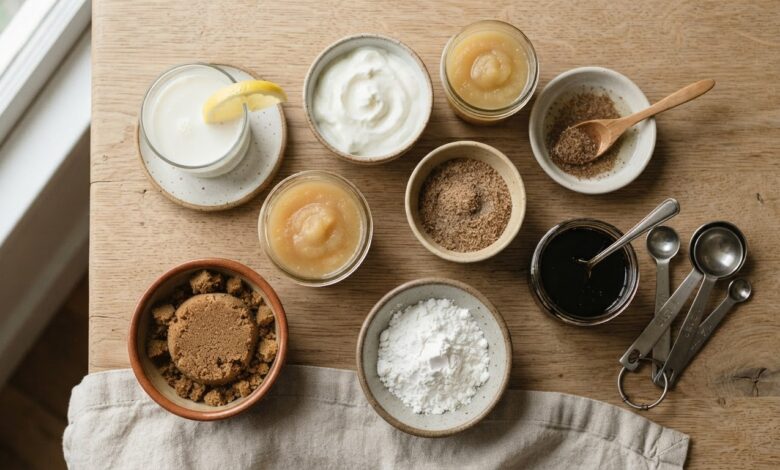
Missing one ingredient halfway through a recipe is usually fixable. This baking substitutes chart collects the swaps that work in everyday cakes, muffins, cookies and quick breads, with amounts in US cups and grams, what each swap changes, and when not to use it. Each row links to a full guide when you need more detail.
How to use it: find the ingredient you are missing, measure the replacement for the amount your recipe needs (the chart is written for the most common amount, so scale up or down in proportion), and read the “Best for / avoid” note before you commit. Replace only one ingredient per bake when you can; two or three substitutions at once make results much harder to predict.
Dairy substitutes
| Missing | Substitute | Best for / avoid |
|---|---|---|
| 1 cup (240 ml) buttermilk | 1 tbsp (15 ml) lemon juice or white vinegar + milk to the 1-cup line; rest 5–10 min. Or 3/4 cup (180 g) plain yogurt + 1/4 cup (60 ml) milk | Pancakes, biscuits, muffins, cakes. Thinner than real buttermilk, so batter may look looser |
| 1 cup (240 ml) heavy cream, for baking | 2/3 cup (160 ml) whole milk + 1/3 cup (76 g) unsalted butter, melted and whisked in | Scones, cakes, sauces, bread pudding. Will NOT whip |
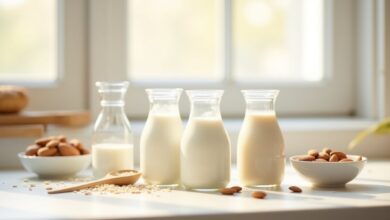
| 1 cup (240 ml) milk | 1 cup (240 ml) unsweetened soy or oat milk, 1:1. Or 1/2 cup (120 ml) evaporated milk + 1/2 cup (120 ml) water | Almost all batters. Sweetened plant milks add sugar and browning |
| 1 cup (230 g) sour cream | 1 cup (230 g) plain whole-milk Greek yogurt, 1:1 | Coffee cake, muffins, cheesecake. Low-fat yogurt gives a drier crumb |
Full ratios and more options: buttermilk substitute, heavy cream substitute for baking and milk substitutes for baking.
Flour and leavener substitutes
| Missing | Substitute | Best for / avoid |
|---|---|---|
| 1 cup cake flour | 14 tbsp (about 105 g) all-purpose flour + 2 tbsp (about 14 g) cornstarch, sifted together 2–3 times | Layer cakes, cupcakes. Avoid in angel food and chiffon cakes |
| 1 cup (120 g) self-rising flour | 1 cup (120 g) all-purpose flour + 1 1/2 tsp (6 g) baking powder + 1/4 tsp (1.5 g) fine salt | Biscuits, quick breads, 2-ingredient doughs |
| 1 tsp (4 g) baking powder | 1/4 tsp (1.5 g) baking soda + 1/2 tsp (1.5 g) cream of tartar | Any batter; this mix is single-acting, so bake right after mixing |
| 1 tbsp (8 g) cornstarch, as a thickener | 2 tbsp (16 g) all-purpose flour | Pie fillings, puddings, sauces. Filling will be slightly cloudy, not glossy |
Baking soda cannot replace baking powder 1:1 on its own: it needs an acid in the recipe, and it is about three to four times stronger. See the baking powder guide for the freshness test and the cake flour substitute guide for 2- and 3-cup amounts.
Sugar and sweetener substitutes
| Missing | Substitute | Best for / avoid |
|---|---|---|
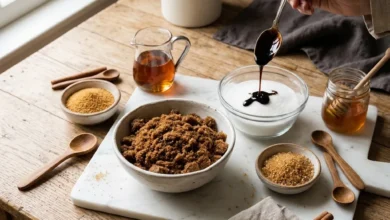
| 1 cup (200 g) packed light brown sugar | 1 cup (200 g) granulated sugar + 1 tbsp (21 g) molasses, mixed until even | Cookies, bars, quick breads. For dark brown sugar use 2 tbsp (42 g) molasses |
| 1 cup (120 g) powdered sugar | 120 g (a heaping 1/2 cup) granulated sugar + 1 tsp (3 g) cornstarch, blended to a fine powder and sifted | Glazes, dusting, simple icings. Can be slightly gritty in buttercream |
| 1 cup (340 g) honey | 1 1/4 cups (250 g) granulated sugar + 1/4 cup (60 ml) extra liquid from the recipe | Cakes and quick breads. Expect a paler crust and less moist crumb |
| 1 cup (200 g) granulated sugar | 1 cup (200 g) packed light brown sugar, 1:1 | Cookies (chewier), spice cakes. Avoid in white cakes and meringues |
Step-by-step methods: brown sugar substitute and how to make icing sugar at home.
Fat substitutes
| Missing | Substitute | Best for / avoid |
|---|---|---|
| 1 cup (240 ml / about 218 g) vegetable oil | 1 cup (227 g) unsalted butter, melted and slightly cooled. Or replace up to half with 1/2 cup (122 g) unsweetened applesauce | Muffins, brownies, boxed cake mix. Applesauce makes a denser, more cake-like crumb |
| 1 cup (227 g) butter, in muffins and quick breads | 3/4 cup (180 ml / about 165 g) neutral oil | Muffins, quick breads, oil-friendly cakes. Avoid in cookies, pie crust, shortbread and buttercream |
| 1 oz (28 g) unsweetened chocolate | 3 tbsp (15 g) unsweetened cocoa powder + 1 tbsp (14 g) butter or oil | Brownies, chocolate cake, frosting |
Measuring butter in sticks, tablespoons or grams? Use the butter conversion chart. More oil swaps with half-and-half examples are in vegetable oil substitutes for baking.
Egg substitutes
| Missing | Substitute | Best for / avoid |
|---|---|---|
| 1 large egg (50 g) | Flax egg: 1 tbsp (7 g) ground flaxseed + 3 tbsp (45 ml) water, rested 10 min until gel-like | Muffins, cookies, brownies, quick breads. Avoid in sponge cakes and custards |
| 1 large egg (50 g) | 1/4 cup (60 g) unsweetened applesauce or plain yogurt | Moist cakes and muffins. Adds density; use for 1–2 eggs at most |
For aquafaba, banana and commercial replacers, see the vegan egg substitutes guide.
Flavor and spice substitutes
| Missing | Substitute | Best for / avoid |
|---|---|---|
| 1 tsp (5 ml) vanilla extract | 1 tsp (5 ml) vanilla bean paste, or 1 tsp (5 ml) bourbon or dark rum | Any batter or frosting. Skip it entirely in strongly spiced bakes if needed |
| 1 tsp pumpkin pie spice | 1/2 tsp ground cinnamon + 1/4 tsp ground ginger + 1/8 tsp ground nutmeg + 1/8 tsp ground cloves or allspice | Pies, muffins, quick breads |
| 1 tbsp (15 ml) lemon juice, for acidity | 1 tbsp (15 ml) white vinegar | Activating baking soda, soured milk. Not for lemon flavor |
Test recipe: substitution-friendly vanilla muffins
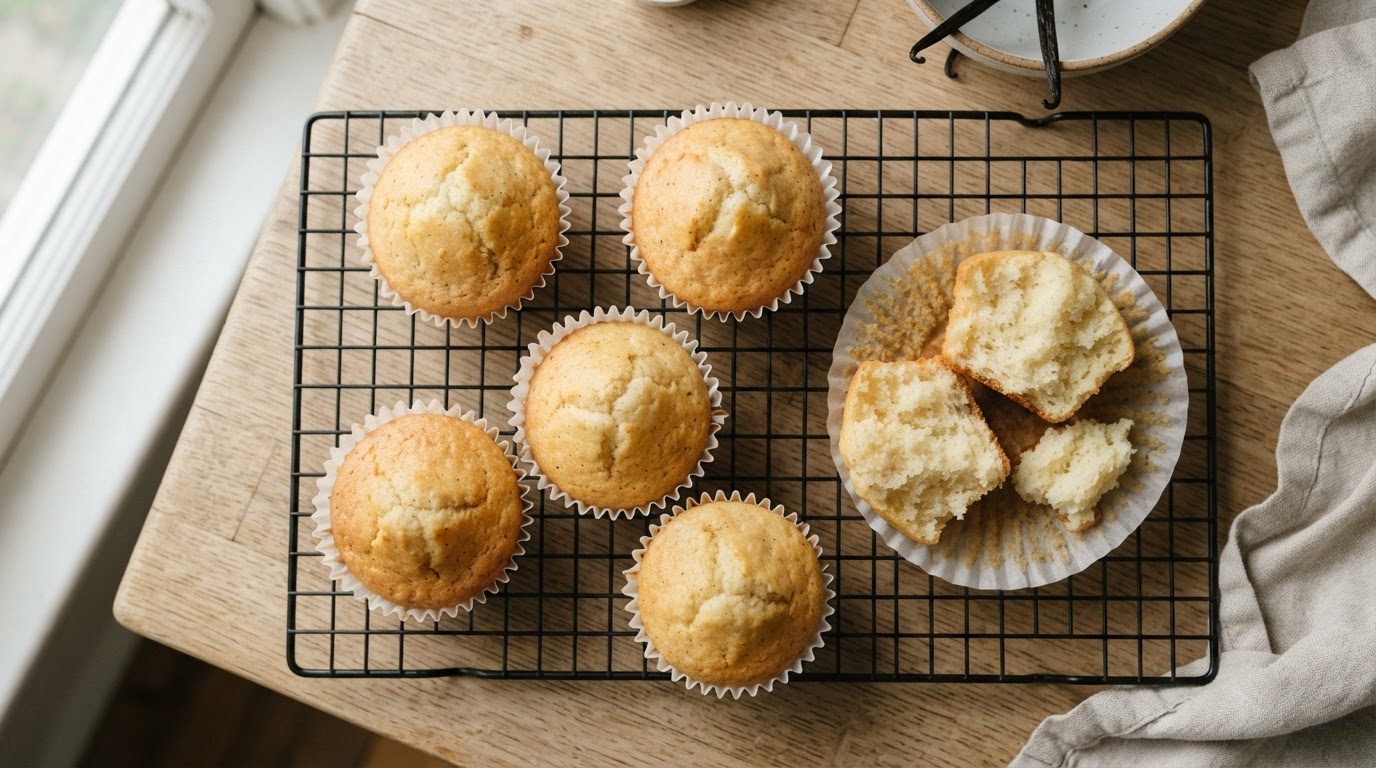
If you want to see how a swap behaves before using it in a special bake, this simple muffin batter tolerates most of the chart above: homemade buttermilk, oil instead of butter, a flax egg for one of the eggs, or brown sugar instead of white.
Yield: 12 standard muffins · Prep: 10 minutes · Bake: 18–22 minutes · Oven: 375°F (190°C) · Pan: 12-cup muffin pan, lined
Ingredients
- 2 cups (250 g) all-purpose flour, spooned and leveled
- 3/4 cup (150 g) granulated sugar
- 2 tsp (8 g) baking powder
- 1/2 tsp (3 g) baking soda
- 1/2 tsp (3 g) fine salt
- 1 cup (240 ml) buttermilk, or 1 tbsp (15 ml) lemon juice + milk to 1 cup
- 1/2 cup (113 g) unsalted butter, melted and cooled, or 1/2 cup (120 ml / about 109 g) neutral oil
- 2 large eggs (100 g), room temperature
- 2 tsp (10 ml) vanilla extract
Method
- Heat the oven to 375°F (190°C) and line a 12-cup muffin pan with paper liners.
- In a large bowl, whisk the flour, sugar, baking powder, baking soda and salt for 30 seconds.
- In a second bowl, whisk the buttermilk, melted butter or oil, eggs and vanilla until smooth.
- Pour the wet ingredients into the dry ingredients and fold with a spatula just until no dry flour remains. A few lumps are fine; overmixing makes tough, peaked muffins.
- Divide the batter evenly among the cups (about 1/4 cup / 70 g each), filling them about three-quarters full.
- Bake 18–22 minutes, until the tops spring back when pressed and a toothpick in the center comes out clean or with a few moist crumbs (internal temperature about 200–205°F / 93–96°C).
- Cool in the pan for 5 minutes, then move to a wire rack.
Troubleshooting substitutions
- Flat or dense bake after a leavener swap: check that the baking powder or soda is fresh (it should fizz strongly in hot water or vinegar) and bake immediately after mixing when using the soda + cream of tartar mix.
- Soapy or metallic taste: too much baking soda, or soda without enough acid. Measure level teaspoons and keep the acidic ingredient (buttermilk, yogurt, brown sugar) in the recipe.
- Cookies spread more than usual: oil or melted butter in place of softened butter, or extra liquid from honey. Chill the dough 30–60 minutes before baking.
- Gummy or heavy crumb: applesauce, yogurt or banana used for more than half the fat or more than two eggs. Scale back the swap.
- Darker crust than expected: brown sugar, honey or sweetened plant milk brown faster. Lower the oven by 25°F (about 15°C) and start checking 5 minutes early.
- Heavy cream substitute will not whip: milk + butter has the fat but not the structure. For topping, use real cream or a whipped-topping alternative.
Storing homemade substitutes
- Dry mixes (self-rising flour, cake flour blend, pumpkin pie spice): store airtight in a cool, dry cupboard and label with the date; use within 2–3 months, since baking powder in self-rising mixes loses strength.
- Homemade baking powder: mix only what you need, or add 1/4 tsp cornstarch per teaspoon to keep a small batch dry.
- Homemade buttermilk and milk + butter cream: make fresh and use the same day.
- Homemade brown sugar: airtight container at room temperature; if it hardens, see the softening method in the brown sugar guide.
- Flax eggs: make fresh; ground flaxseed itself keeps best in the refrigerator or freezer.
Frequently asked questions
Can I use more than one substitute in the same recipe?
You can, but each swap changes moisture, fat, acidity or structure a little, and the effects add up. One or two swaps in a forgiving recipe such as muffins or quick bread usually works; three or more in a layer cake or cookie often does not.
Should I substitute by volume or by weight?
Weight is more reliable, especially for flour and powdered sugar, whose cup weights vary with how they are scooped. The chart gives both; when they disagree with your recipe’s own weights, follow the recipe’s weight.
Can I use baking soda instead of baking powder?
Not on its own in the same amount. For each teaspoon of baking powder, use 1/4 teaspoon baking soda plus 1/2 teaspoon cream of tartar, or 1/4 teaspoon baking soda plus about 1/2 cup of an acidic liquid such as buttermilk in place of the same amount of milk.
What is the best all-around egg substitute for baking?
For muffins, cookies and brownies, a flax egg (1 tablespoon ground flaxseed + 3 tablespoons water) is the most dependable for one or two eggs. Recipes that rely on whipped eggs for lift, such as sponge cake or soufflé, do not have a simple replacement.
Are these substitutes gluten-free?
The flour swaps (cake flour and self-rising flour) contain wheat and are not gluten-free. Most other swaps contain no gluten on their own, but check labels on baking powder, cocoa and spice blends if you bake for someone with celiac disease.