No-Yeast Quick Bread Recipe (Easy Buttermilk Loaf)
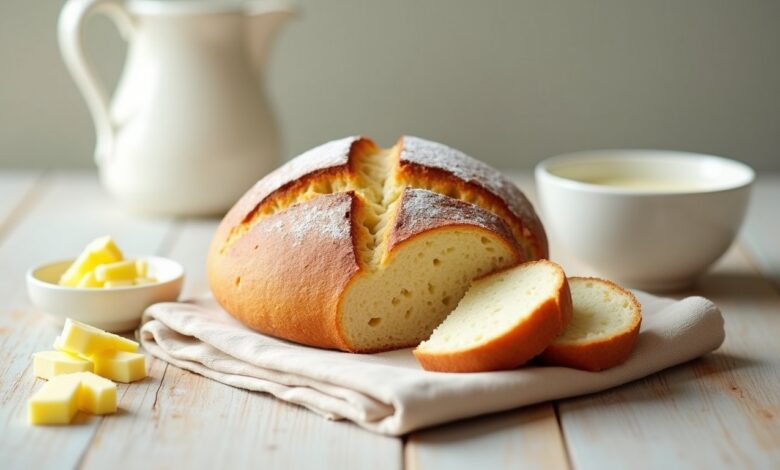
Need a no-yeast quick bread recipe? You can make a simple, rustic loaf without yeast, kneading or a rise time by using baking powder, a little baking soda and buttermilk. Mix the dough briefly, shape it, cut a cross on top and bake until the crust is golden and the center is cooked through.
Unlike soft, stretchy yeast bread, this quick bread without yeast has a tighter, biscuit-like crumb and a mild buttermilk tang. It’s lovely alongside soup or chili and especially good toasted with butter the next day. The key is working quickly once the liquid hits the baking soda rather than resting the dough.
No-Yeast Quick Bread at a Glance
- Yield: one small round loaf, approximately 8 slices
- Prep: about 15 minutes
- Bake: about 35–45 minutes
- Total: about 1 hour, plus cooling
- Oven: 425°F (220°C)
- Leavening: baking powder and baking soda, not commercial yeast
- Equipment: mixing bowl, spoon, baking sheet and parchment
Recipe-development disclosure: These proportions are an editorial starting formulation and have not been independently test-baked by SugerBakes. Results depend on flour absorption, buttermilk thickness, shaping and your oven. Follow the dough texture and doneness indicators below rather than assuming exact timing.
Ingredients for Easy Bread Without Yeast
- 3 cups (360 g) all-purpose flour, plus a little for dusting your hands and work surface.
- 1 tablespoon (3 teaspoons) baking powder.
- ½ teaspoon baking soda.
- 1 teaspoon fine salt.
- 1 tablespoon (12–15 g) sugar, optional, for very subtle sweetness and crust browning.
- 1½ cups (360 ml) plain buttermilk, ideally cool and shaken before measuring.
- 2 tablespoons (28 g) unsalted butter, melted and slightly cooled, optional for a richer crumb.
Use ordinary all-purpose flour rather than self-rising flour. Self-rising flour already contains leavening and salt; adding the same amounts again would likely throw off the formula. The optional butter is added to the liquid mixture; if omitting it, the loaf will be leaner and may feel slightly less tender.
How to Make No-Yeast Quick Bread
- Preheat the oven: Set to 425°F (220°C). Put a rack near the center and line a baking sheet with parchment. Prepare the pan before mixing because the chemical leaveners begin reacting when liquid is added.
- Combine dry ingredients: Whisk flour, baking powder, baking soda, salt and optional sugar in a large bowl. Disperse the raising agents thoroughly so the loaf does not develop bitter or uneven pockets.
- Combine liquid ingredients: Whisk buttermilk with optional melted butter. The butter should not be hot; slight clumping in cool buttermilk is not a problem.
- Form a shaggy dough: Make a well in the dry mixture and pour in the liquid. Stir briefly with a wooden spoon or spatula until no large patches of dry flour remain. The dough should be soft, shaggy and a little tacky, not smooth or pourable.
- Shape gently: Tip the dough onto a lightly floured surface. With floured hands, bring it together with just a few gentle folds; avoid kneading repeatedly. Shape it into a compact round loaf about 6–7 inches across. Excessively wide, flat dough will bake differently.
- Score the top: Place the round on the lined baking sheet. Cut a deep cross about ½ inch deep across the top so it can open as it expands.
- Bake promptly: Bake 35–45 minutes, checking after around 30 minutes. The crust should be golden brown and firm, and the base should sound hollow when tapped. If a thermometer is available, the center should generally reach roughly 200°F (93°C); temperatures are an aid, not a substitute for checking the crumb.
- Cool: Let the bread cool on a rack for at least 20–30 minutes before slicing. Cutting while very hot can make a properly baked quick bread seem gummy.
What Should the Dough Feel Like?
Because flour brands and buttermilk differ, this dough should be mixed by feel. It’s intended to be soft enough to gather without extensive kneading, but not so wet that it spreads like cake batter. If dry flour remains at the bottom of the bowl, add a tablespoon of buttermilk at a time until the dough comes together. If the dough spreads excessively, dust in a small amount of flour during shaping; avoid packing in extra cups of flour or making it stiff.
Do not rest it for an hour as you would a yeast dough. Chemical leaveners start working as soon as the wet and dry ingredients meet, and an extended room-temperature wait can waste some of their lifting action.
How Does No-Yeast Bread Rise?
Quick bread uses chemical leavening rather than the gas made by a yeast fermentation. Baking powder releases carbon dioxide as the dough gets wet and heats up. Baking soda reacts with acidic buttermilk, which also supports the rise. When the loaf enters the hot oven, the gas expands, lifting the dough enough to make a pleasant tender crumb.
King Arthur Baking’s guide to baking bread without yeast describes these chemical leaveners and why soda breads and quick breads are suitable for bakers who have no yeast. For a separate example of soda bread proportions, see its Irish buttermilk brown bread recipe.
No-Yeast Quick Bread vs. Yeast Bread
| Feature | No-yeast quick bread | Classic yeast bread |
|---|---|---|
| Rising agent | Baking powder and/or baking soda | Commercial yeast or sourdough culture |
| Proofing | No rise or proof period needed | Usually one or more rests and rises |
| Mixing | Mix gently to a shaggy dough | Often knead or develop gluten |
| Texture | Tender, somewhat dense, biscuit-like | Airier, chewier and more elastic in many styles |
| Flavor | Mild buttermilk tang | Fermented flavors develop with time |
| Best use | Soup, chili, toast and quick meals | Sandwiches, rolls and many bakery loaves |
Can You Make Bread Without Buttermilk?
Buttermilk provides acidity for the baking soda, as well as flavor and moisture. If you don’t have it, our buttermilk substitute guide explains how to acidify milk with lemon juice or vinegar and how yogurt-based options behave. A quick approximation for 1½ cups of buttermilk is to put 1½ tablespoons of lemon juice or white vinegar into a measuring jug, then top up with plain milk to the 1½-cup line and let stand briefly.
This acidified milk does not exactly mimic cultured buttermilk’s thickness, so add it gradually if needed to reach a shaggy rather than pourable dough. If you need a dairy-free loaf, choose a tested dairy-free soda bread recipe where the alternative liquid has been accounted for, rather than assuming that every milk beverage will work the same way.
Can I Use Self-Rising Flour?
Not with the leavening quantities listed above. Self-rising flour includes baking powder and salt, so you would need a separate tested recipe that starts with self-rising flour rather than simply substituting it gram-for-gram while leaving every other ingredient unchanged.
How to Make the Bread More Tender
- Measure flour by weight: the recipe’s 360 g is more reliable than scooping flour heavily into a cup.
- Use fresh baking powder and soda: old leaveners can make the loaf flat; see our baking powder guide.
- Do not knead repeatedly: the dough does not need the developed gluten structure of sandwich bread.
- Keep the dough fairly moist: a stiff, dry dough usually produces a dry loaf.
- Bake shortly after mixing: avoid lengthy delays before the loaf goes into the oven.
- Cool before slicing: the inner crumb continues setting as the loaf cools.
Easy Variations
Herb quick bread
Fold a tablespoon of finely chopped fresh rosemary or chives into the dry flour for a savory loaf. Use restrained amounts so the herbs don’t dominate the mild bread.
Cheese quick bread
For a richer bread, fold a small handful of finely shredded sharp cheddar into the flour, adjusting expectations about browning and salt. Cheese can increase crust color and change the bake time; the base recipe is the most predictable place to start.
Whole wheat flour
Replacing a small portion of the all-purpose flour with whole wheat flour is an option, but whole wheat absorbs liquid differently and gives a heartier texture. Try replacing only ½ cup (about 60 g) first and add liquid carefully if the dough becomes dry. For a fully whole-wheat loaf, follow a developed whole-wheat soda bread formula.
Sweet breakfast bread
For a sweeter loaf, use a purpose-developed quick bread recipe rather than simply adding lots of sugar here. Higher sugar levels change moisture, browning and texture. Our cranberry orange loaf is a different kind of sweet quick bread.
Troubleshooting
Why is my no-yeast bread dense?
Some density is expected compared with yeast bread. If it is very heavy, check that your baking powder is fresh, your dough is not overloaded with flour, and you mix only briefly. Baking powder should be evenly dispersed through the dry ingredients.
Why is the middle gummy?
The loaf may be too wet or underbaked, or may have been sliced while still steaming hot. A more compact round and longer cooling can help. If the crust browns before the middle cooks, tent the top loosely with foil.
Why did the loaf spread flat?
The dough may have had too much liquid, or was not shaped into a firm enough round. Aim for a soft but gatherable dough, and start baking soon after mixing.
Why does it taste bitter?
A bitter or soapy taste can come from unevenly mixed or excessive baking soda, especially if the dough has insufficient acid. Whisk the dry ingredients thoroughly and measure the baking soda carefully.
Can I bake it in a loaf tin?
Possibly, but the shape affects oven timing and how the middle bakes. The method above is for a free-standing round loaf. Use a recipe developed for an 8½-by-4½-inch or 9-by-5-inch loaf tin if you want a tall sandwich-like shape.
Storing and Freezing Quick Bread
This loaf tastes best on the day it is baked. Cool completely and store wrapped at room temperature for about 1–2 days in a cool dry kitchen; for longer storage, freeze cooled slices individually and thaw or toast as needed. Refrigerating may make the crumb seem firm. Discard bread with mold or spoilage.
Frequently Asked Questions
Can I make bread with no yeast and no baking powder?
You may be able to use baking soda with a sufficiently acidic liquid in a different, tested soda bread recipe. Don’t omit the baking powder from this specific formula without changing the other proportions.
Does no-yeast bread taste like normal bread?
It has a more tender, scone-like or biscuit-like crumb and less fermented flavor than most yeast breads. It is excellent with butter, soup or jam, but it will not be identical to a yeasted sandwich loaf.
Do I need to knead quick bread?
No. Bring the dough together with just a few gentle folds; repeated kneading can make chemically leavened bread tough.
Can I use regular milk instead of buttermilk?
Plain milk lacks buttermilk’s acidity. Use an acidified milk substitute or a recipe designed for regular milk, rather than replacing buttermilk 1:1 without accounting for baking soda.
Can you freeze no-yeast bread?
Yes. Cool, slice, wrap tightly and freeze for convenient toast later. The crust may soften during storage, but reheating can restore some of its texture.
Does no-yeast mean gluten-free?
No. This recipe contains all-purpose wheat flour and therefore contains gluten. It also contains dairy from buttermilk and optional butter.
More Bread and Baking Guides
Explore our vegetable oil substitutes if you want to compare the optional melted butter with oil, or see milk substitutes for baking to understand why ordinary plant milk isn’t an exact match for buttermilk. For a sweet breakfast loaf, try homemade banana bread.
Sources and Editorial Development Note
The chemical-leavening technique follows the principles explained in King Arthur Baking’s no-yeast bread guide, and its Irish buttermilk brown bread example is a reference for the role of acidic dairy. This SugerBakes loaf formula is an original editorial adaptation, not a documented independent kitchen test. The baking time, yield and internal temperature are starting guides; check your own loaf carefully.