Chai-Spiced Apple Babka Recipe (Soft Twisted Loaf)
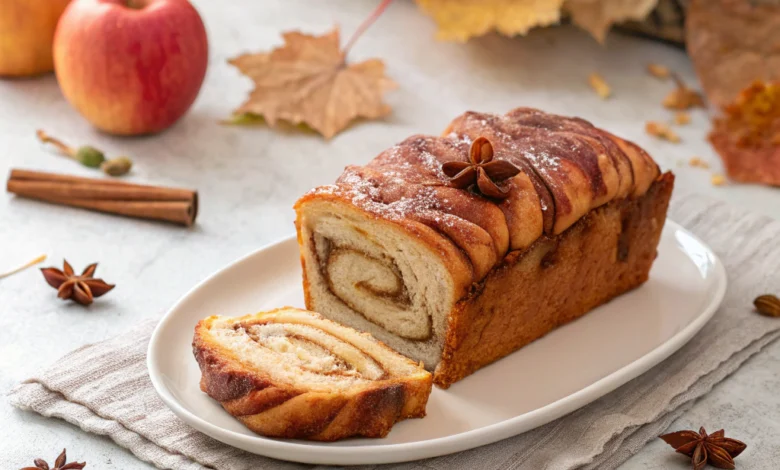
This chai-spiced apple babka combines a soft enriched yeast dough with a thick apple filling scented with cinnamon, cardamom, and ginger. The twisted loaf looks elaborate, but the process is manageable when you let the dough rise fully and cool the filling before shaping. The recipe below makes one 9-by-5-inch loaf.
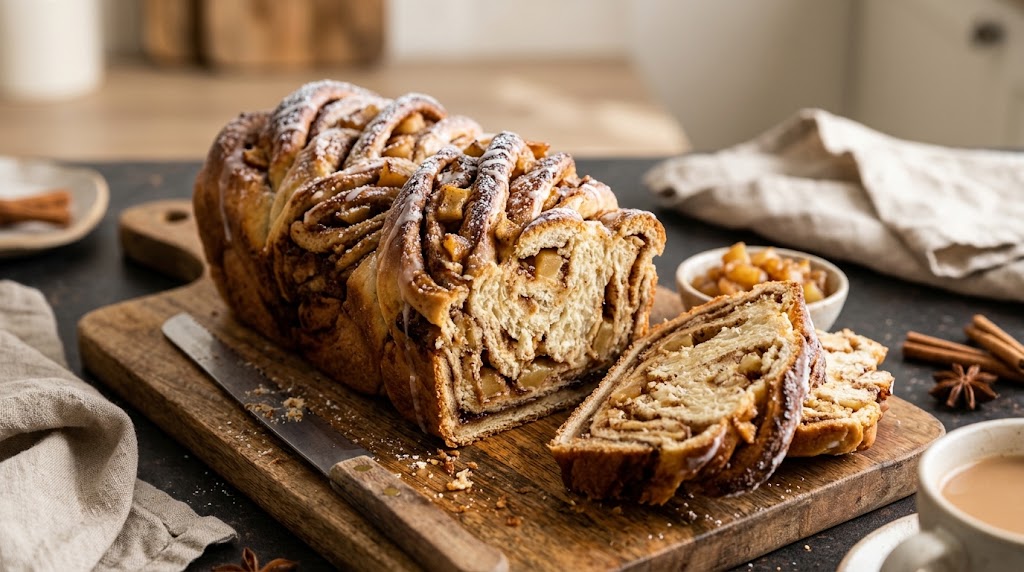
Recipe overview
- Yield: 1 loaf (about 10 slices)
- Hands-on time: approximately 40 minutes
- Rising and chilling: approximately 2–4 hours, depending on room temperature
- Bake: approximately 40–50 minutes at 350°F (175°C)
- Pan: 9-by-5-inch loaf pan, lined with parchment
Ingredients
For the enriched dough
- 3 cups (360 g) all-purpose flour, plus a little for dusting
- 1/2 cup (120 ml) lukewarm milk, around 95–105°F (35–40°C)
- 2 1/4 teaspoons (7 g) instant yeast
- 1/4 cup (50 g) granulated sugar
- 1 large egg, at room temperature
- 3/4 teaspoon fine salt
- 6 tablespoons (85 g) unsalted butter, softened and cut into pieces
For the chai-spiced apple filling
- 2 medium firm apples (about 250–300 g after peeling and coring), finely diced
- 2 tablespoons (28 g) unsalted butter
- 1/3 cup (65 g) packed light brown sugar
- 1 teaspoon ground cinnamon
- 1/2 teaspoon ground cardamom
- 1/4 teaspoon ground ginger
- Small pinch each of ground cloves and black pepper (optional)
- 1 tablespoon (8 g) cornstarch
- 1 teaspoon lemon juice
Optional finish
- 1 tablespoon milk for brushing the top before baking
- 1/3 cup (40 g) confectioners’ sugar mixed with 1–2 teaspoons milk for a thin drizzle after cooling
Step-by-step: how to make apple babka
1. Mix and knead the dough
Combine flour, yeast, sugar, and salt in a mixing bowl. Add the lukewarm milk and egg, then mix until a rough dough forms. Knead for 4–5 minutes before adding the softened butter a little at a time. Continue kneading until the butter is fully incorporated and the dough is smooth and elastic, roughly 8–12 minutes more with a mixer on low to medium-low speed. The dough should be soft and slightly tacky, not soupy; add flour only a teaspoon at a time if needed.
2. Let the dough rise
Transfer the dough to a lightly greased bowl, cover, and let rise in a comfortably warm spot until puffy and approximately doubled, about 1–2 hours. For easier shaping, refrigerate the covered dough for 30–60 minutes after its first rise. You can also refrigerate it overnight and allow extra time for the shaped loaf to rise the next day.
3. Cook the apple filling
While the dough rises, melt the butter in a skillet over medium heat. Add the finely diced apples and cook for about 6–8 minutes, stirring, until they begin to soften and much of their liquid evaporates. Mix the brown sugar, spices, and cornstarch together before adding them to the apples. Stir in the lemon juice and cook for another 1–2 minutes, until the mixture is thick and no longer watery. Cool completely before filling the dough; a wet or hot filling makes the layers slip and can leave the center underbaked.
4. Roll, fill, and twist
Line a 9-by-5-inch loaf pan with parchment. On a lightly floured surface, roll the chilled dough into a rectangle approximately 12 by 16 inches (30 by 40 cm). Spread the cooled filling in a thin, even layer, leaving a 1/2-inch border. Roll up tightly from the long side into a 16-inch log and pinch the seam closed. Chill the log for 15 minutes if too soft to handle. Slice the log lengthwise into two long halves. With the cut sides facing upward, twist the halves around each other, pinch the ends, and gently transfer the twist into the pan.
5. Proof and bake
Cover the shaped loaf and let it rise until visibly puffy, usually 45–75 minutes (longer if chilled overnight). Toward the end, preheat the oven to 350°F (175°C). Brush the top lightly with milk if desired. Bake for 40–50 minutes; loosely tent with foil if the top browns too quickly. The center of the bread—not an apple pocket—should register about 190°F (88°C) on an instant-read thermometer, and the dough should look set. If the center is not done, bake a little longer and recheck.
6. Cool before slicing
Let the babka rest in its pan for about 10–15 minutes, then lift it onto a rack. Cool at least 30–45 minutes before slicing so the apple filling can settle. For an optional glaze, drizzle the confectioners’ sugar mixture over the cooled loaf.
Babka troubleshooting
- Filling leaks during twisting: The apples were too wet or the dough too warm. Cook off excess moisture and chill the filled log before cutting.
- Loaf is brown but gummy in the center: Tent with foil and continue baking until the dough reaches the target internal temperature.
- Dough is sticky: Chill it rather than adding large amounts of extra flour; a little tackiness is normal in enriched dough.
- Slow rise: Enriched dough often needs more time than lean bread dough. Judge the rise by volume, not the clock.
- Uneven apple pieces: Dice the apples small and uniformly so the filling spreads thinly and cooks consistently.
Which apples work best?
Firm apples such as Granny Smith, Honeycrisp, or Braeburn are useful because they hold some shape during cooking. Very juicy apples may need a few extra minutes in the skillet. Use the measured cooked filling rather than adding raw apples directly to the dough.
Storage and serving
Serve the loaf plain, toasted, or with coffee or tea. Keep leftover babka tightly wrapped at room temperature for up to 2 days in a cool kitchen, or freeze well-wrapped slices for up to 2 months for best quality. Thaw at room temperature and warm briefly before serving. If you add a perishable topping, follow that topping’s refrigeration guidance.
More apple and cinnamon bakes
If you enjoy this flavor combination, see our cinnamon swirl bread, apple crisp with oats, and homemade apple pie filling. For a tested reference on babka shaping and bake temperatures, consult King Arthur Baking’s cranberry-orange babka. This apple variation has not been independently kitchen-tested.