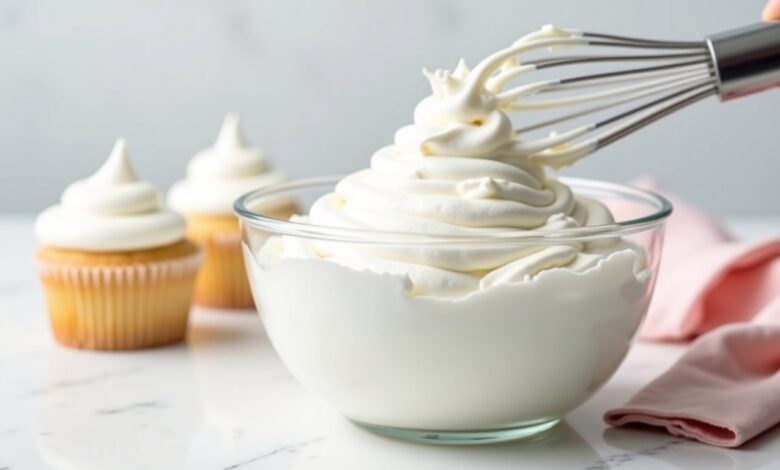
7 Minute Frosting Recipe (Fluffy, Glossy & Classic)
Classic 7 minute frosting is soft, shiny, and billowy, with a light marshmallow-like texture. Unlike buttercream, this traditional frosting contains no butter: egg whites and sugar are heated and whipped until the mixture makes glossy peaks. It’s lovely on coconut cake, cupcakes, chocolate cake, and vintage layer cakes.
At a glance: Prep 5 minutes · Heating and beating about 7–10 minutes (temperature matters more than the clock) · Makes enough to frost approximately one 8-inch two-layer cake · Best used immediately.
7 minute frosting ingredients
- 2 large egg whites (preferably from pasteurized eggs)
- 1 1/2 cups (300 g) granulated sugar
- 1/3 cup (80 ml) water
- 1 tablespoon light corn syrup (helps prevent crystallization)
- 1/4 teaspoon cream of tartar
- Pinch of fine salt
- 1 teaspoon vanilla extract
Use very clean, grease-free mixing bowls and beaters. Even traces of oil can reduce how well egg whites whip. This recipe needs a hand mixer and a heatproof metal or glass bowl that fits over a saucepan without touching the water.
How to make 7 minute frosting
1. Set up a double boiler
Bring about 1–2 inches of water to a gentle simmer in a saucepan. Select a heatproof bowl that sits securely over the pan without touching the water. Keep water at a simmer, not a rolling boil.
2. Combine ingredients
Off the heat, whisk together egg whites, sugar, water, corn syrup, cream of tartar, and salt in the heatproof bowl until combined. Reserve the vanilla until the end.
3. Beat over simmering water
Place the bowl over simmering water and beat with a hand mixer continuously, moving the beaters around the bowl. The mixture will become thick, pale, and increasingly glossy. This commonly takes around 7 minutes but can take longer depending on bowl size, mixer speed, and heat.
4. Check the temperature
Use a clean instant-read food thermometer to check that the egg-white mixture has reached 160°F (71°C) before removing it from the heat. Do not rely only on elapsed time. The USDA’s egg safety guidance explains safe handling and heating of egg mixtures. Do not serve an underheated egg-white frosting.
5. Add vanilla and finish
Remove the bowl carefully using oven mitts; it will be hot. Add vanilla, then beat briefly until glossy peaks stand. Spread or swoop frosting over a fully cooled cake right away.
What does properly whipped frosting look like?
The finished icing is glossy and thick but remains softer than buttercream. It should hold pillowy peaks when the beaters lift. It should not be grainy, thin, or noticeably runny.
Troubleshooting 7 minute frosting
Frosting won’t form peaks
The bowl or tools may be greasy, or the frosting may not yet be fully whipped. Make sure the mixture reaches the target temperature and continue whipping until thick. A weak mixer may require additional time.
Grainy frosting
Sugar may not have completely dissolved or the syrup may have crystallized. Keep heat moderate and beat continuously; avoid splashing sugar crystals onto the sides of the bowl.
Weeping or sticky frosting
High humidity, warm storage, or insufficient whipping can make this meringue-like frosting release moisture. Apply it soon after preparation, avoid prolonged warm-room exposure, and keep cake refrigerated for storage.
Frosting gets stiff before spreading
Seven-minute frosting is most workable just after whipping. Have the cooled cake ready before you start, and spread the icing promptly.
7 minute frosting vs buttercream
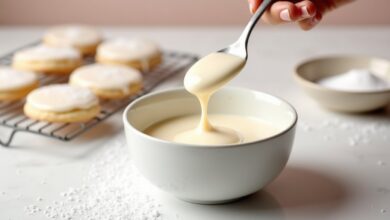
Buttercream is rich, buttery, and usually more stable for elaborate piping. Seven-minute frosting is lighter, sweeter, fluffy, and resembles marshmallow cream; it is best for soft swoops or simple swirls rather than sharp, complex decorations. For a pourable alternative, try our powdered sugar icing recipe.
Best cakes for this classic frosting
- Coconut layer cakes with shredded coconut sprinkled on top
- Chocolate layer cakes for a contrast of dark cake and white icing
- Vanilla cupcakes and small celebration cakes
- Lemon cakes, with citrus flavor in the cake layers rather than excess juice in the frosting
Storage and serving safety
This frosting is best on the day it is prepared. Refrigerate frosted cakes promptly and keep them chilled until close to serving, especially because the icing contains eggs. Perishable frosted cakes should not sit at room temperature for more than two hours (one hour in very hot conditions). The frosting’s texture may become wetter during extended storage, so it is not an ideal make-ahead topping.
Frequently asked questions
Why is it called 7 minute frosting?
The name refers to the traditional approximate beating time over heat. The actual process may vary; the safe egg temperature is more important than an exact seven-minute timer.
Can I make it without a hand mixer?
A hand mixer is strongly recommended for the heated method because the mixture must be whipped continuously over hot water. Beating by hand is difficult and may not produce the right volume.
Can I make 7 minute frosting ahead?
It does not hold its ideal texture as well as buttercream. Prepare it shortly before frosting your cake and refrigerate the finished cake.
Is this frosting safe for children or pregnancy?
For anyone especially vulnerable to foodborne illness, use pasteurized eggs or egg whites and still heat the egg mixture thoroughly to 160°F (71°C). Consult food safety recommendations if serving individuals with special dietary needs.
More sweet baking inspiration
Pair this fluffy frosting with vanilla gluten-free cake or spread a chilled layer of strawberry cake filling between two cake layers before adding your preferred frosting.