Graham Cracker Crust for Cheesecake (Easy 3-Ingredient Base)
A good graham cracker crust for cheesecake needs to be buttery enough to hold its shape without feeling greasy. This simple base uses graham cracker crumbs, melted butter, and a little sugar to make one 9-inch (23 cm) cheesecake crust. A small optional pinch of salt balances the sweetness.
Below are instructions for both prebaking the crust and chilling it for a no-bake filling. Choose the method recommended by your cheesecake recipe; a chilled crumb crust is not the same as a fully baked crust, and fillings vary in how firmly they set.
Graham Cracker Cheesecake Crust at a Glance
- Yield: one 9-inch (23 cm) springform-pan bottom crust with a short rim
- Active preparation: approximately 15 minutes
- Optional prebake: 9–11 minutes at 350°F (175°C)
- Baked method: allow roughly 15 minutes to cool before filling, or follow the filling recipe
- No-bake option: chill the formed crust for at least 45 minutes before adding a cold, firm-set filling
- Equipment: food processor or rolling pin, bowl, 9-inch springform pan, flat-bottomed measuring cup
Ingredients
- 1½ cups (150 g) fine graham cracker crumbs, from approximately 9–10 full cracker sheets, depending on brand
- 5 tablespoons (70 g) unsalted butter, melted and cooled slightly
- 2 tablespoons (25 g) granulated sugar
- Optional: ⅛ teaspoon fine salt
Important: Weighing the crumbs is more reliable than counting crackers, since sizes differ across brands. The mixture should resemble damp sand and hold together when pinched. Do not add water or milk to fix crumb texture.
How to Make a Graham Cracker Crust for Cheesecake
1. Prepare the pan
For easy removal, place a round of parchment on the base of your 9-inch (23 cm) springform pan. Assemble the pan firmly. If using the prebaked option, preheat the oven to 350°F (175°C).
2. Make fine crumbs
Break graham crackers into pieces and pulse in a food processor until finely ground. Alternatively, seal the crackers inside a sturdy bag and crush with a rolling pin. Avoid large shards, which prevent a compact, even base. Measure 1½ cups (150 g) of finished crumbs.
3. Combine crumbs, sugar, and butter
Stir the crumbs, sugar, and optional salt together. Pour in the slightly cooled melted butter and mix until all the crumbs look uniformly damp. If the mixture crumbles apart when pinched, check that you measured the butter correctly and keep stirring before adding anything else.
4. Press evenly into the pan
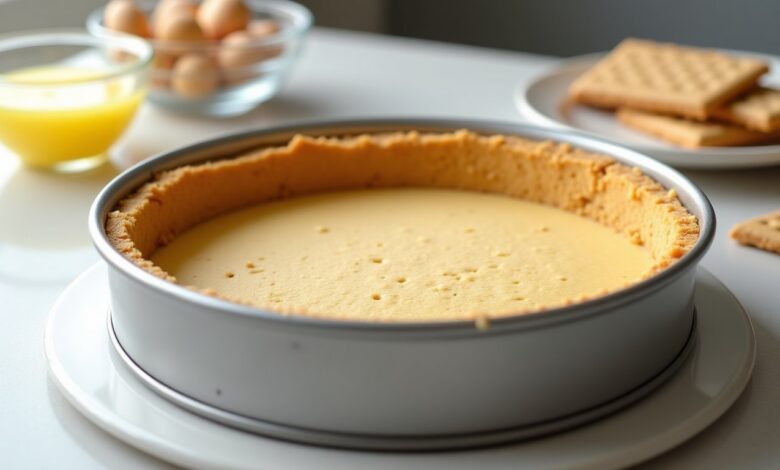
Tip the mixture into the prepared springform pan. First spread it evenly, then press firmly across the bottom using the flat base of a measuring cup. Make a modest rim about ½ inch (1 cm) high if desired. Focus on even thickness, especially where the bottom meets the sides, rather than making a tall, fragile crust.
5. Choose the baked or chilled method
For baked cheesecake or a prebaked crumb base: Bake the crust at 350°F (175°C) for approximately 9–11 minutes, until fragrant and slightly darker at the edges. Cool on a rack for about 15 minutes before filling, or follow the instructions in your cheesecake recipe. If the filling calls for an unbaked crust, follow that instead of automatically prebaking.
For a no-bake cheesecake: Instead of prebaking, refrigerate the pressed crust for at least 45 minutes to firm the butter before adding a cold filling. Keep the assembled dessert refrigerated according to its filling recipe. Chilling is best with a filling designed to set without an oven.
Why Does a Graham Cracker Crust Fall Apart?
A loose crust often comes from unevenly crushed crackers, insufficient mixing with butter, or pressing too gently. Fine, uniform crumbs pack together more reliably. Use a flat-bottomed cup to press the base firmly, and let the butter set by cooling or chilling before slicing the finished cheesecake.
Should You Bake Graham Cracker Crust Before Cheesecake?
It depends on your filling and the recipe developer’s method. A brief prebake helps dry and set the crumb base and can give it a toastier flavor. Some baked cheesecakes include prebaking, while others add filling to an unbaked crust. No-bake cheesecakes typically use a chilled base. When following a specific cheesecake filling recipe, use its instructions for crust treatment and baking sequence rather than doubling the bake time.
How Much Crust Fits a 9-Inch Springform Pan?
The amounts above cover the base of a typical 9-inch springform pan and allow a short, optional rim. They are not enough to line the full height of a deep cheesecake pan. If your cheesecake needs tall crumb sides, increase the mixture proportionally and use the quantities specified by that filling recipe.
Can You Use Store-Bought Graham Cracker Crumbs?
Yes. Weigh 150 g of plain fine graham cracker crumbs rather than relying on a box’s cracker count. Pre-sweetened crust mixes may already contain sugar and should not be substituted directly without checking their instructions.
Variations and Substitutions
A less-sweet crust
Reduce or omit the 2 tablespoons of added sugar if your crackers and filling are sweet enough. The crust may pack a little differently, so press it firmly.
A chocolate cookie crumb crust
Chocolate wafer cookies or sandwich cookies can make a rich alternative, but their added fat and cream filling change how much butter the crust needs. Use a recipe formulated for the specific cookies rather than replacing graham crumbs by equal volume without adjusting.
A gluten-free crumb crust
Use certified gluten-free graham-style crumbs, checking labels for allergens. For more specific ingredient and binding advice, read our gluten-free cheesecake crust guide.
Storage and Making It Ahead
An unfilled prebaked crust can be cooled, covered, and kept at room temperature for up to 1 day in a cool, dry kitchen, or frozen securely wrapped for up to about 1 month. A no-bake pressed crust should stay refrigerated until filled. Once filled, always follow the filling’s refrigeration and food-safety directions; cream cheese and other dairy fillings are perishable.
Frequently Asked Questions
Do you have to put sugar in a graham cracker crust?
No. A little sugar adds sweetness, but plain graham crackers already contain sugar. Reducing it is possible, though the crust’s texture may change slightly.
Can I make this recipe in an 8-inch pan?
Yes, but the same quantity will form a thicker bottom crust in an 8-inch pan. Press it evenly and follow your filling’s directions to avoid an overly thick base.
Can I replace melted butter with oil?
Butter firms when cooled, which helps a pressed crumb crust hold together. Liquid oil does not set the same way, so this recipe is not designed for a direct oil substitution.
How can I avoid a soggy cheesecake crust?
Use fine crumbs, a sufficiently compact base, and the prebake method when appropriate for the chosen filling. Let prebaked crust cool before adding filling. Very wet fillings and refrigeration time also affect the final texture.
Cheesecake Recipes and Related Guides
Use this crust with our simple creamy cheesecake when its baking instructions allow. For small individual portions, see our mini cheesecake cupcakes. The cake fillings guide offers additional dessert pairing ideas.
Source and Recipe Note
The crumb-to-butter ratio and prebaking guidance were checked against the King Arthur Baking graham cracker crust and easy cheesecake reference recipes. This particular 9-inch SugerBakes formulation is an editorial recipe and has not been independently kitchen-tested by the site.