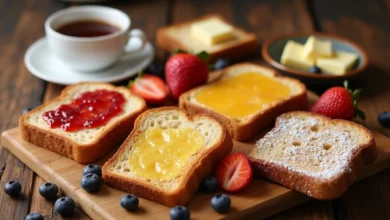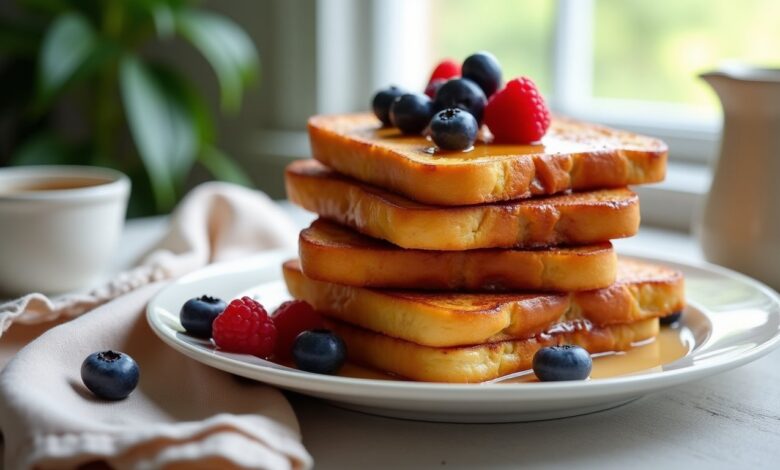
Challah Bread French Toast (Golden, Custardy & Easy)
Challah bread French toast turns thick slices of egg-rich bread into a warm breakfast with golden edges and a soft, fully cooked center. A smooth cinnamon-vanilla custard, a short dip and moderate skillet heat are the keys. This simple stovetop recipe serves four.
At a glance: 8 slices · 4 servings · about 10 minutes preparation · approximately 20 minutes cooking (depending on skillet size) · total around 30 minutes. Cooking time varies with slice thickness and heat.
Why Use Challah for French Toast?
Challah is a soft enriched bread, often made with eggs and oil, that can absorb custard while maintaining a tender crumb. Compared with thinner sandwich bread, a sturdy 3/4-inch slice is less likely to break during a quick dip. Day-old challah is especially convenient because slightly dry bread holds together better.
Challah Bread French Toast Ingredients
- 8 slices challah bread, approximately 3/4 inch (2 cm) thick (350–400 g total)
- 3 large eggs
- 3/4 cup (180 ml) whole milk
- 1 tablespoon (12 g) granulated sugar, optional
- 1 teaspoon vanilla extract
- 1/2 teaspoon ground cinnamon
- Small pinch of fine salt
- 2 tablespoons (28 g) unsalted butter, divided, for the skillet
- For serving, optional: maple syrup, berries or powdered sugar
Equipment: large shallow dish, whisk, nonstick or seasoned skillet, spatula and plate. Keep raw egg custard refrigerated until needed.
How to Make Challah French Toast
- Prepare the bread. Slice the challah about 3/4 inch thick. For very fresh bread, set the slices uncovered briefly to let the surfaces become a little drier.
- Whisk the custard. Beat the eggs in a wide, shallow bowl, then whisk in milk, optional sugar, vanilla, cinnamon and salt until even.
- Warm the skillet. Heat a nonstick or seasoned pan over medium or medium-low heat; add enough butter to coat the surface lightly.
- Dip the slices. Coat each side of a challah slice in the custard for roughly 10–20 seconds. Older, drier slices may need slightly longer, but do not leave the bread until it breaks apart.
- Cook gently. Transfer slices to the pan without crowding. Cook roughly 3–4 minutes per side until golden and hot throughout, with no wet egg mixture in the middle. Adjust the heat if the outside browns too quickly.
- Repeat and serve. Cook remaining slices in batches, adding more butter when needed. Serve warm with syrup or fruit.
How Long Should You Soak Challah?
A short 10–20-second dip per side is a useful starting point for bread around 3/4 inch thick. Dry, sturdy slices can take a little longer; fresh and airy challah needs less. The bread should be coated, slightly heavier, and still easy to lift. Over-soaking can leave an unpleasantly wet center.
How to Get Golden Edges Without a Soggy Center
- Use gentle, consistent heat. A very hot skillet can brown the exterior before the egg mixture inside has cooked.
- Choose substantial slices. Thin bread breaks more easily; extremely thick slices need longer cooking.
- Whisk until smooth. Avoid visible streaks of egg white.
- Do not crowd the pan. Leave room to flip and brown each slice.
- Check for doneness. The center should be fully cooked, not liquid, before serving.
Toppings and Flavor Variations
Top challah French toast with sliced strawberries, blueberries or a little maple syrup. Add finely grated orange zest to the custard for a citrus note, or skip the optional sugar for a less sweet base. A light dusting of powdered sugar adds sweetness without soaking the bread.
For another sweet breakfast bread, browse our cinnamon swirl bread. For individual make-ahead bakes, see our blueberry lemon muffins.
Common Problems and Quick Fixes
The outside is dark but the center is wet
Reduce the heat and give the slices more time. The custard should be cooked through; a golden crust alone is not sufficient.
The bread tears when dipping
Start with a firmer or slightly stale loaf and shorten the soak. Move each slice using both hands or a wide spatula if it is fragile.
The pan gets too dry
Add a small amount of fresh butter between batches. If the butter turns dark quickly, wipe out the pan and lower the heat.
Frequently Asked Questions
Is challah better than brioche for French toast?
Both are enriched breads that work well. Challah is often made with oil rather than butter; brioche typically uses butter and tastes richer. Choose according to your preferred flavor and what is available.
Can I use fresh challah bread?
Yes. Lightly air-dry freshly cut slices and shorten the soaking time so the bread stays intact.
Can I mix the custard ahead of time?
Yes. Cover and refrigerate it promptly, and keep it chilled until you are ready to cook. Do not leave the raw-egg mixture at room temperature.
Can I freeze cooked French toast?
Allow it to cool safely, refrigerate promptly, then freeze slices separated with parchment in a tightly sealed freezer-safe container. Reheat thoroughly before serving; texture may be softer than freshly cooked.
Baking Reference
For background on using egg-enriched bread and preparing the egg-and-milk mixture, see King Arthur Baking’s brioche French toast recipe. This challah version has its own ingredient quantities and skillet guidance; cooking times remain approximate.