Sugar-Free Cupcakes Recipe (Moist Vanilla + Gluten-Free Option)
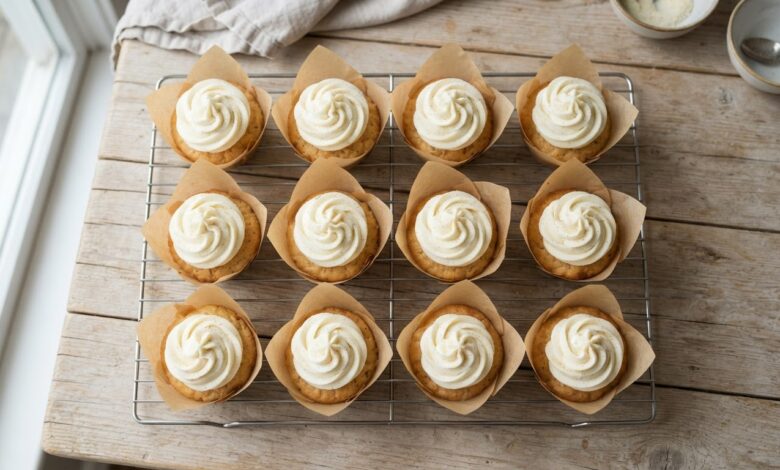
These sugar-free cupcakes are soft, moist vanilla cupcakes sweetened with a granulated erythritol–monk fruit blend or allulose instead of sugar. One bowl, 12 cupcakes, about 20 minutes in the oven at 350°F (175°C). Below you will find the classic flour version, a gluten-free almond flour version, a quick sugar-free frosting, chocolate and lemon variations, and fixes for the problems sugar-free baking usually causes (dry crumb, grit, cooling aftertaste, pale tops).
- Ingredients (cups and grams)
- How to make sugar-free cupcakes
- Why these sugar-free swaps work
- Gluten-free almond flour version
- Sugar-free frosting for cupcakes
- Troubleshooting
- FAQ
Recipe at a Glance
| Yield | 12 standard cupcakes (or 36 mini) |
| Prep time | 15 minutes |
| Bake time | 18–21 minutes (erythritol blend) or 22–25 minutes (allulose) |
| Oven | 350°F (175°C); 325°F (165°C) if using allulose |
| Pan | 12-cup muffin tin with paper liners |
| Sweetener | Granulated erythritol–monk fruit 1:1 blend or granulated allulose |
Ingredients for Sugar-Free Vanilla Cupcakes
- 1 1/2 cups (180 g) all-purpose flour, spooned and leveled
- 1 1/2 tsp (6 g) baking powder
- 1/4 tsp (1.5 g) baking soda
- 1/4 tsp (1.5 g) fine salt
- 1/2 cup (113 g) unsalted butter, softened
- 3/4 cup (150 g) granulated erythritol–monk fruit 1:1 blend or 1 cup (200 g) granulated allulose
- 2 large eggs (about 100 g out of the shell), room temperature
- 1/2 cup (120 g) full-fat sour cream or plain full-fat Greek yogurt, room temperature
- 1/4 cup (60 ml) unsweetened almond milk or regular milk
- 2 tsp (10 ml) pure vanilla extract
Weighing the flour matters more than usual here: sugar-free batter has less moisture-holding sugar, so an extra 20–30 g of packed flour is enough to make the cupcakes dry. If you only have cups, see our baking substitutes chart for gram conversions of common swaps.
How to Make Sugar-Free Cupcakes
- Heat the oven to 350°F (175°C), or 325°F (165°C) if you are using allulose. Line a 12-cup muffin tin with paper liners.
- Whisk the dry ingredients: flour, baking powder, baking soda and salt in a bowl. Set aside.
- Cream the butter and sweetener with a hand or stand mixer on medium-high for 3 minutes, until pale and fluffy. Erythritol crystals do not dissolve into butter the way sugar does, so do not shorten this step; it is where most of the air comes from.
- Add the eggs one at a time, beating 30 seconds after each, then beat in the vanilla.
- Alternate dry and wet: on low speed add one-third of the flour mixture, then the sour cream, then another third of the flour, then the milk, then the rest of the flour. Mix only until no dry streaks remain.
- Fill the liners two-thirds to three-quarters full (about 3 tablespoons / 45 g batter each). A #20 scoop makes this even.
- Bake 18–21 minutes (erythritol blend) or 22–25 minutes at the lower temperature (allulose), until the tops spring back and a toothpick in the center comes out clean or with a few moist crumbs. Sugar-free cupcakes stay paler than regular ones, so judge by touch and toothpick, not color.
- Cool 5 minutes in the pan, then move to a rack and cool completely (about 45 minutes) before frosting.
Mini sugar-free cupcakes: fill a mini muffin pan (36 cups) with about 1 tablespoon (15 g) batter each and bake 10–12 minutes at the same temperature.
Why These Sugar-Free Swaps Work
Sugar does more than sweeten a cupcake: it holds water, tenderizes the crumb, helps butter trap air and browns the top. Each swap below replaces one of those jobs.
| Swap | What it replaces | What to expect |
|---|---|---|
| Erythritol–monk fruit 1:1 blend | Sweetness and bulk, cup for cup | Clean sweetness, slightly drier crumb; a faint cooling note if eaten very cold |
| Allulose (use 1/3 more by volume) | Sweetness, moisture and browning | The most “sugar-like” texture and color, but it browns fast, so bake 25°F (15°C) lower |
| Sour cream or Greek yogurt | The moisture sugar normally holds | Tender, moist crumb that stays soft for 2–3 days |
| Baking powder + a little baking soda | The lift lost because erythritol creams less air | A gentle dome; the soda also reacts with the sour cream’s acidity |
| 2 tsp vanilla | Flavor depth that caramelized sugar adds | Rounder flavor that hides any sweetener aftertaste |
Sweeteners that do not work 1:1 here: pure stevia or pure monk fruit extract (no bulk, so the cupcakes collapse and taste bitter), xylitol (works, but is dangerous for dogs), and liquid sweeteners like honey or maple syrup (they are sugars, so the cupcakes would no longer be sugar-free). For a cake-sized version of the same idea, see our homemade sugar-free yellow cake mix.
Gluten-Free Sugar-Free Cupcakes (Almond Flour Version)
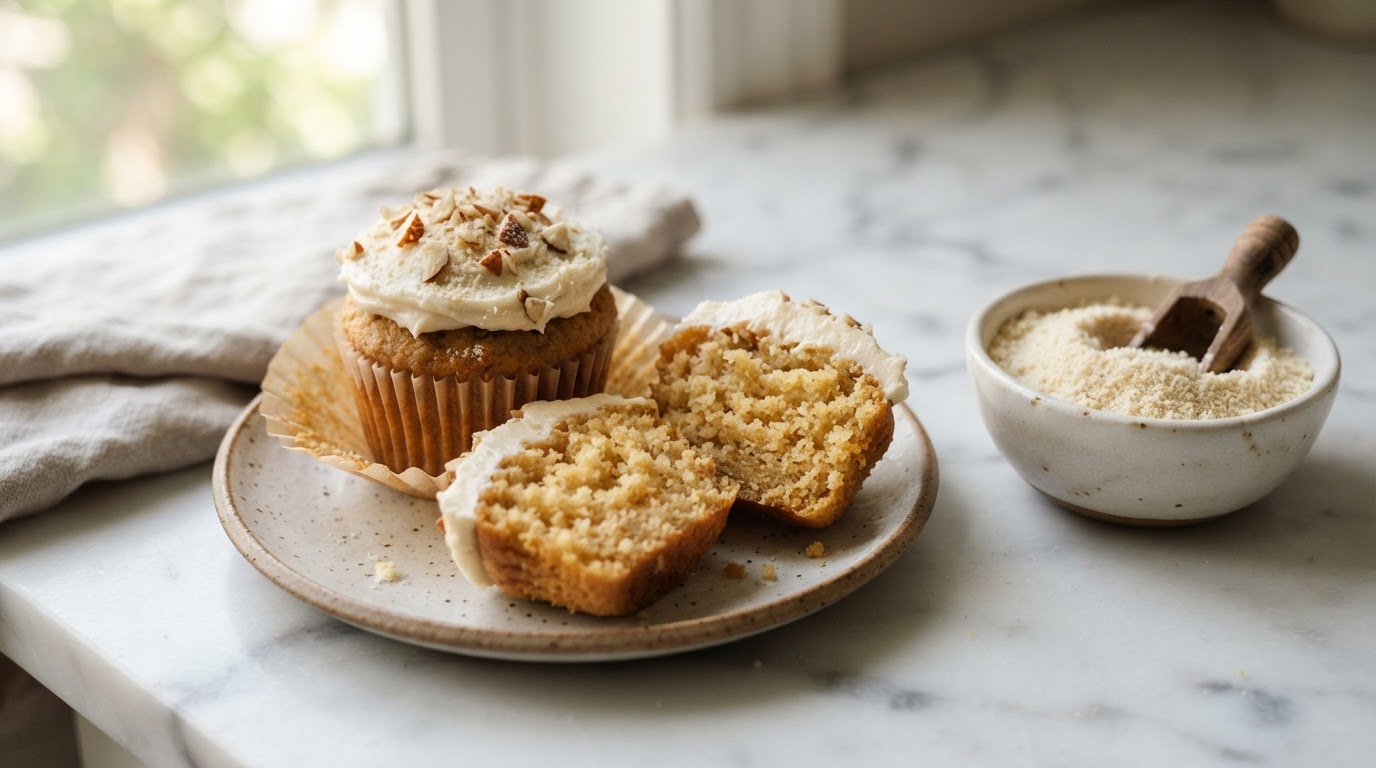
Almond flour has no gluten and very little starch, so it needs an extra egg for structure and a spoonful of tapioca starch to keep the crumb from being crumbly. These are slightly denser and more moist than the flour version, with a fine, cake-like texture and a lower carb count.
- 2 1/4 cups (252 g) blanched, superfine almond flour (not almond meal)
- 2 tbsp (16 g) tapioca starch or arrowroot
- 2 tsp (8 g) baking powder
- 1/4 tsp (1.5 g) fine salt
- 1/2 cup (100 g) granulated erythritol–monk fruit blend or 2/3 cup (130 g) allulose
- 3 large eggs, room temperature
- 1/4 cup (57 g) unsalted butter, melted and slightly cooled
- 1/3 cup (80 g) full-fat sour cream or Greek yogurt
- 2 tsp (10 ml) vanilla extract
Method: Heat the oven to 325°F (165°C); almond flour browns faster than wheat flour. Whisk the almond flour, tapioca, baking powder and salt. In a second bowl whisk the sweetener, eggs, melted butter, sour cream and vanilla until smooth, then stir in the dry mix. Rest the batter 5 minutes so the almond flour hydrates. Divide among 12 lined cups and bake 20–24 minutes, until golden at the edges and set in the center. Cool completely in the pan: warm almond flour cupcakes are fragile. Read more about how almond flour behaves in our easy almond flour cake.
Prefer a 1:1 gluten-free flour blend? Use the main recipe and replace the 180 g all-purpose flour with 180 g of a 1:1 gluten-free blend that contains xanthan gum, then rest the batter 10 minutes before scooping. The vanilla gluten-free cake uses the same approach.
Sugar-Free Frosting for Cupcakes
Granulated sweetener makes gritty frosting, so always use a powdered sweetener. You can buy powdered erythritol or allulose, or blitz granulated sweetener in a blender: see how to make sugar-free powdered sugar.
- 4 oz (113 g) full-fat brick cream cheese, softened
- 1/2 cup (113 g) unsalted butter, softened
- 1 cup (120 g) powdered erythritol blend or powdered allulose
- 1 tsp (5 ml) vanilla extract and a pinch of salt
Beat the butter and cream cheese 2 minutes until smooth, add the powdered sweetener and beat 2 more minutes, then beat in the vanilla and salt. This frosts 12 cupcakes with a generous swirl. For a pipeable buttercream and a chocolate version, use our full sugar-free frosting recipe.
Variations: Chocolate, Lemon and Lower-Sugar
- Sugar-free chocolate cupcakes: replace 1/4 cup (30 g) of the flour with 1/3 cup (30 g) unsweetened Dutch-process cocoa and add 2 tbsp (30 ml) extra milk.
- Sugar-free lemon cupcakes: rub the zest of 2 lemons into the sweetener before creaming and replace the milk with 2 tbsp (30 ml) lemon juice plus 2 tbsp (30 ml) milk.
- Low-sugar (not sugar-free) cupcakes: use half regular sugar (75 g) and half erythritol blend (75 g). You get normal browning and almost no aftertaste with half the sugar.
- Dairy-free: use dairy-free butter sticks, a thick coconut yogurt and almond milk.
Troubleshooting Sugar-Free Cupcakes
| Problem | Likely cause | Fix |
|---|---|---|
| Dry, crumbly cupcakes | Too much flour or overbaking | Weigh the flour (180 g); start checking at 17 minutes |
| Dense or flat | Butter not creamed long enough, or cold eggs | Cream 3 full minutes; use room-temperature eggs and sour cream |
| Cooling “minty” aftertaste | Erythritol, especially when served cold | Serve at room temperature or use allulose or half allulose |
| Tops too dark or sunken | Allulose baked at 350°F | Bake allulose cupcakes at 325°F (165°C) |
| Sticky tops the next day | Allulose attracts moisture | Store loosely covered, not in a sealed box, for the first day |
| Gritty frosting | Granulated sweetener | Use powdered sweetener and beat 2 minutes |
| Hard or crunchy cupcakes after chilling | Erythritol recrystallizes in the cold | Let chilled cupcakes stand 30 minutes at room temperature |
Storage and Freezing
- Unfrosted: airtight at room temperature for up to 2 days.
- Frosted with cream cheese frosting: refrigerate up to 4 days; bring to room temperature 30 minutes before serving.
- Freezer: freeze unfrosted cupcakes on a tray, then bag them for up to 2 months. Thaw at room temperature in the bag, then frost.
FAQ
Is it possible to make cupcakes without sugar?
Yes. A bulk sweetener such as an erythritol–monk fruit blend or allulose replaces sugar cup for cup (allulose slightly more), and extra moisture from sour cream or yogurt plus a little more leavening make up for what sugar normally does to texture.
Can diabetics have sugar-free cupcakes?
Sugar-free cupcakes contain no added sugar, but the flour version still contains carbohydrates from wheat flour. The almond flour version is much lower in carbohydrates. Anyone managing diabetes should check the full ingredient list and follow the advice of their doctor or dietitian about portion sizes and sweeteners.
What is the best sweetener for sugar-free cupcakes?
Allulose gives the most sugar-like moisture and browning; an erythritol–monk fruit 1:1 blend is the easiest to measure and the most widely available. A half-and-half mix of the two gives good texture with very little aftertaste.
Can I make sugar-free cupcakes from a cake mix?
Yes. A zero-sugar box mix bakes into 24 cupcakes at the temperature on the box (usually 350°F/175°C for 18–22 minutes). Our sugar-free yellow cake mix guide covers store-bought options and a homemade mix.
Why are my sugar-free cupcakes pale?
Erythritol does not caramelize, so the tops stay light even when fully baked. Rely on the toothpick test and a springy top. Allulose browns like sugar, which is why it needs a lower oven temperature.