Chocolate Buttercream Frosting Recipe (Easy Cocoa Frosting)
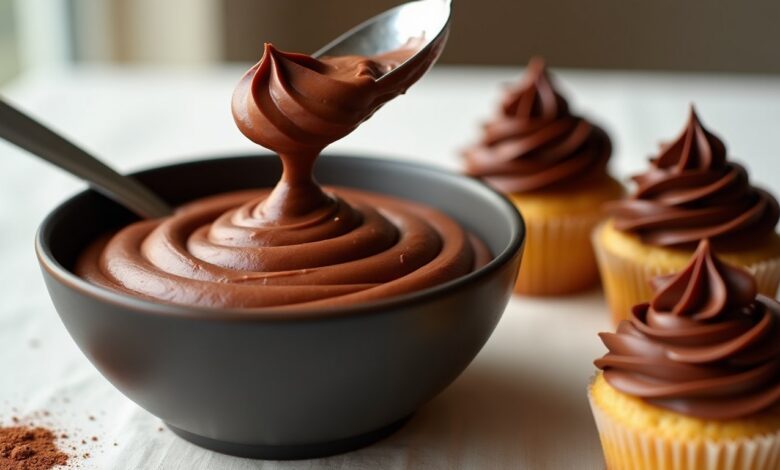
This chocolate buttercream frosting recipe makes a creamy cocoa frosting that you can spread over a cake or pipe into soft swirls on cupcakes. It uses butter, powdered sugar, cocoa powder, and a little milk—no melted chocolate or cooking required. The flavor is chocolatey, the texture is smooth, and you can adjust the consistency for decorating.
The most reliable approach is to start with soft but not melted butter, sift any lumpy dry ingredients, and add the milk gradually. Below you’ll find both US cup measures and gram weights, along with troubleshooting advice and frosting quantities.
Chocolate Buttercream Recipe at a Glance
- Prep: about 15 minutes
- Yield: approximately 2 to 2½ cups of frosting; enough for about 12–16 cupcakes or a 9 × 13-inch sheet cake with a moderate layer
- No stove or baking required
- Tools: electric hand mixer or stand mixer, bowl, sieve, spatula
- Texture: fluffy American-style cocoa buttercream; not ganache
Ingredients
- ¾ cup (170 g) unsalted butter, softened (not melted)
- 2¾ cups (about 310 g) confectioners’ sugar (powdered sugar), sifted if lumpy
- ⅓ cup (about 28 g) unsweetened natural or Dutch-process cocoa powder
- 2 to 3 tablespoons (30–45 ml) whole milk or heavy cream, plus a little extra only if necessary
- 1 teaspoon vanilla extract
- ⅛ teaspoon fine salt
About the cocoa: Natural cocoa produces a pleasantly bright chocolate flavor, while Dutch-process cocoa often tastes deeper and smoother. Either is suitable here because there’s no chemical leavening reaction to manage. For a coffee accent, add ¼ teaspoon espresso powder dissolved into the milk; that’s an optional seventh ingredient.
How to Make Chocolate Buttercream Frosting
1. Beat the butter
Place softened butter in a large bowl. Beat on medium speed for about 2 minutes until smooth and slightly lighter in color, then scrape the sides and bottom of the bowl. If the butter looks greasy or melted, cool it before proceeding.
2. Mix the powdered sugar and cocoa
Whisk powdered sugar and cocoa together in a separate bowl, breaking up any cocoa lumps. Sifting produces a particularly smooth frosting if you’re using a fine piping tip.
3. Add the dry mixture in stages
With the mixer on low, add about one-third of the sugar-cocoa mixture. Once mostly incorporated, add 1 tablespoon of milk or cream. Repeat until all the dry mixture is incorporated, gradually using 2 tablespoons total liquid.
4. Flavor and whip briefly
Add vanilla and salt. Beat on medium speed for 1–2 minutes until smooth and fluffy. If the frosting looks too stiff, add the remaining tablespoon of liquid a teaspoon at a time. For extra-neat piping, stop once it holds a soft peak instead of whipping large air bubbles into it.
5. Frost a completely cool cake
Spread with an offset spatula or fill a piping bag. Do not frost a warm cake: the buttercream can soften, melt, or pull crumbs from the surface.
How Much Chocolate Buttercream Do You Need?
- 12 standard cupcakes with generous swirls: one batch is usually enough.
- 16–18 cupcakes with smaller spreads: one batch is generally enough.
- One 9 × 13-inch cake: one batch for a moderate topping.
- One 8-inch two-layer cake with filling and outside frosting: plan about 1½ to 2 batches depending on thickness and decorations.
- Elaborate flowers, borders and tall piping: make extra frosting so you don’t run short.
These are approximate decorating quantities, not exact guarantees: how thickly you apply icing makes a substantial difference.
Tips for Fluffy, Smooth Frosting
- Use butter that yields to light pressure but holds its shape; do not microwave until melted.
- Sift lumpy powdered sugar and cocoa to prevent dark specks and gritty pockets.
- Add milk or cream by the teaspoon near the end—you can thin buttercream more easily than you can thicken it.
- For a darker chocolate flavor, use Dutch-process cocoa or add the optional espresso powder.
- Scrape the bowl frequently so no pale butter streaks remain.
- If making delicate piped decorations, chill the finished frosting briefly if your kitchen is warm.
How to Fix Chocolate Buttercream Problems
Too thick or hard to spread
Beat briefly with 1 teaspoon of milk at a time until spreadable. A little extra liquid goes a long way; avoid pouring in several tablespoons at once.
Too soft for piping
If the butter is warm, refrigerate the mixture for 10–15 minutes, then remix gently. If the room temperature is normal but the frosting is still loose, add a few tablespoons of sifted powdered sugar. This will also make it sweeter.
Grainy or lumpy
Make sure you used confectioners’ sugar rather than granulated sugar. Cocoa clumps can be hard to break down once in butter; sifting dry ingredients before mixing is the best prevention.
Too sweet
A tiny additional pinch of salt or a little unsweetened cocoa can help balance perceived sweetness. Reducing the powdered sugar dramatically may make the frosting less stable.
Buttercream vs. Chocolate Glaze vs. Ganache
Chocolate buttercream is a whipped, butter-based frosting that holds swirls. A chocolate glaze is thinner and designed for pouring or drizzling. Ganache is typically made by combining chocolate and warm cream; it sets differently and has a denser texture. Choose buttercream when you want frosting that can be spread or piped.
What Cakes Pair Well with Cocoa Buttercream?
Try it on a small vanilla layer cake, mini vanilla cakes, light sponge cake, or a birthday cupcake batch. For a tangier, lighter-colored alternative, see our cream cheese icing recipe.
How to Store and Reuse Chocolate Buttercream
Keep frosting in a covered container in the refrigerator for up to about 4 days, particularly when prepared with milk or cream. Freeze in a freezer-safe airtight container for up to 2 months for best quality. Thaw frozen frosting in the refrigerator, then allow it to soften slightly and beat briefly to restore spreadability. Store frosted cakes with perishable fillings according to their most perishable ingredient.
Frequently Asked Questions
Can I use Dutch-process cocoa instead of natural cocoa?
Yes. This frosting contains no baking soda or other chemical leavener, so either style can be used. Dutch-process cocoa often gives a darker hue and rounder flavor.
Can I make chocolate buttercream without heavy cream?
Yes. Milk works well. Begin with the smaller amount and adjust gradually; cream makes a slightly richer frosting.
Can I make the frosting in advance?
Yes. Cover it well, refrigerate, then soften slightly and re-whip briefly before decorating. Avoid leaving dairy-based frosting unrefrigerated for extended periods.
How do I make it darker?
Use good-quality Dutch-process cocoa or a little extra cocoa powder. More cocoa may make the frosting stiffer, so adjust with drops of milk if needed. Don’t add liquid food coloring in large amounts.
Further Reading and Recipe Note
For another trusted chocolate buttercream formulation, see King Arthur Baking’s chocolate buttercream. Our recipe above uses its own ingredient ratios and explanatory guidance based on established buttercream technique. This formulation is an editorial recipe and has not been independently test-baked by SugerBakes.