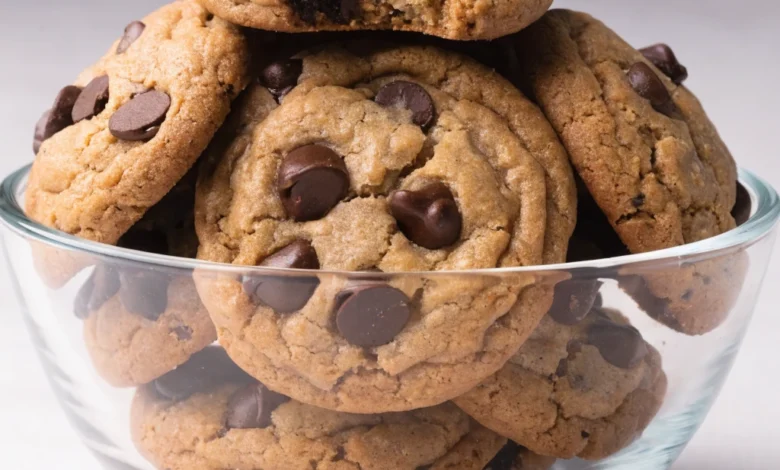
Peanut Butter Chocolate Chip Cookies (+ Gluten-Free & Low-Sugar Versions)
These peanut butter and chocolate chip cookies are soft in the middle, crisp at the edges and made in one bowl. Below you will find the classic recipe with all-purpose flour, plus a flourless gluten-free version, an almond flour version and low-sugar and sugar-free options, each with exact cups and grams.
Jump to: Classic recipe · Flourless gluten-free · Almond flour · Low-sugar & sugar-free · Why the swaps work · Troubleshooting · Storage · FAQ
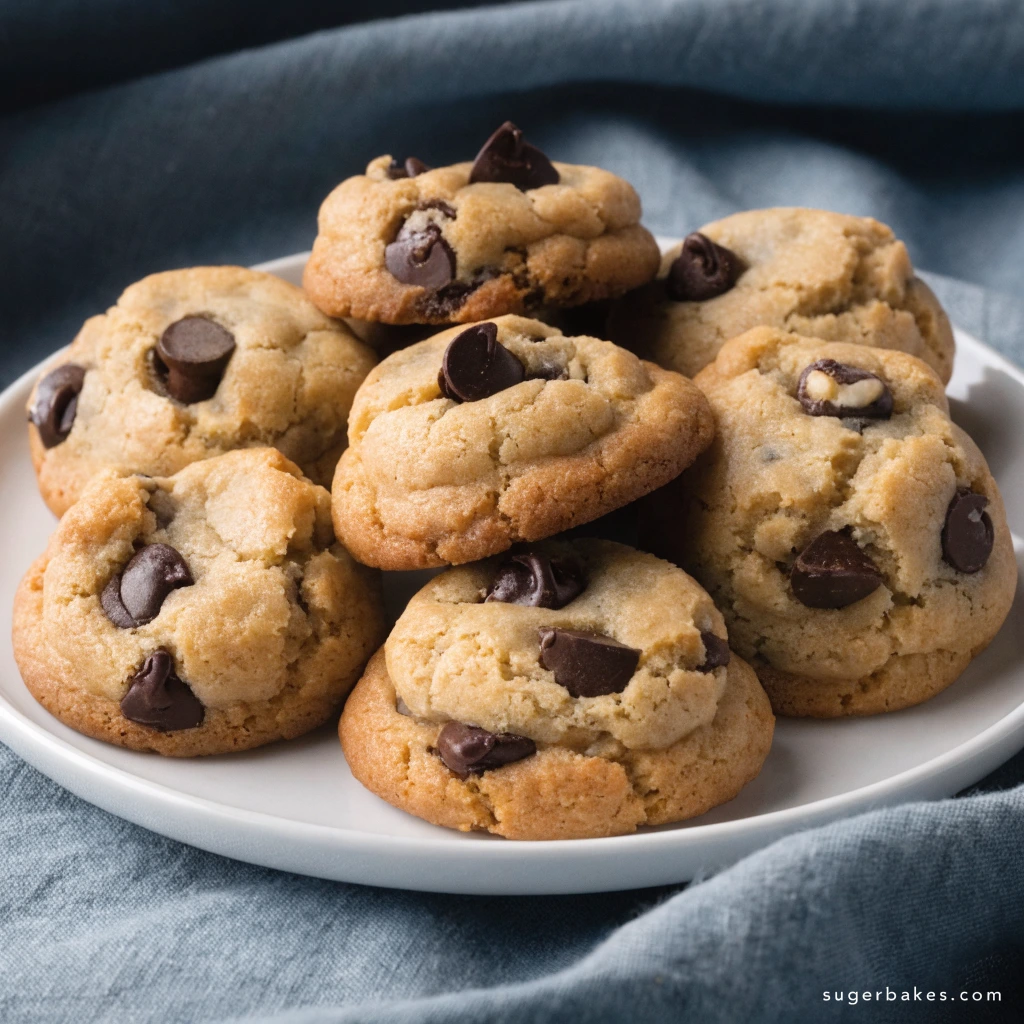
Classic Peanut Butter and Chocolate Chip Cookies
Oven: 350°F (175°C) · Prep: 15 minutes (plus optional 30 minutes chilling) · Bake: 10–12 minutes per sheet · Yield: about 24 cookies from 1 1/2-tablespoon (25 g) scoops.
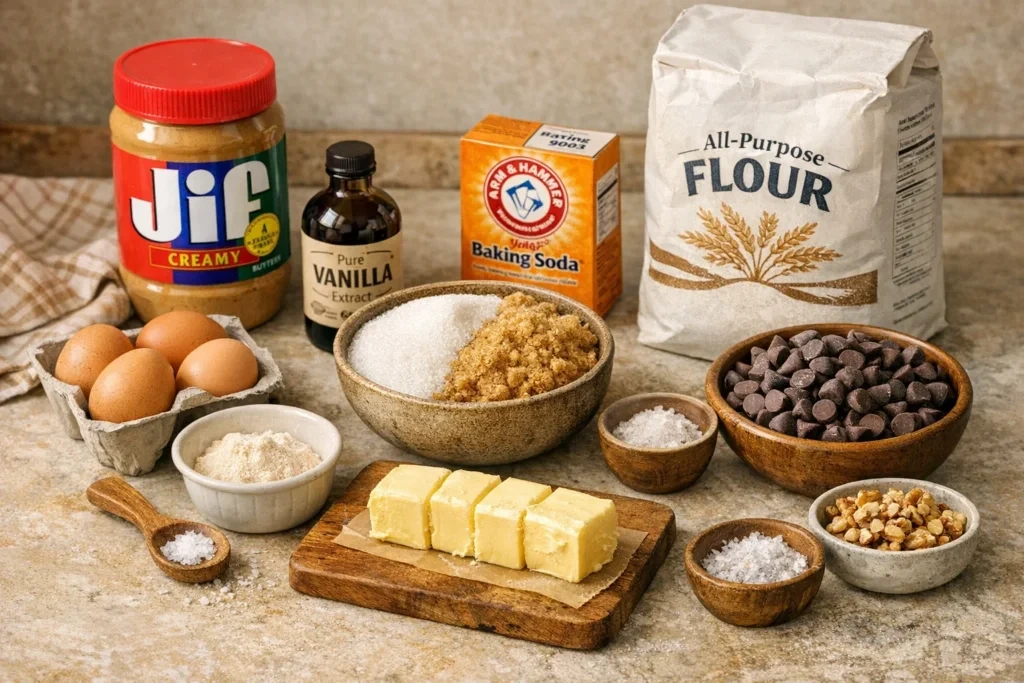
Ingredients (makes about 24 cookies)
- 1/2 cup (113 g) unsalted butter, softened
- 1/2 cup (100 g) granulated sugar
- 1/2 cup (100 g) packed light brown sugar
- 3/4 cup (190 g) creamy peanut butter (processed, not natural)
- 1 large egg (50 g), room temperature
- 1 tsp (5 ml) vanilla extract
- 1 1/4 cups (160 g) all-purpose flour, spooned and leveled
- 1/2 tsp (3 g) baking soda
- 1/4 tsp (1.5 g) fine salt
- 1 cup (170 g) chocolate chips (milk, semi-sweet or dark)
What each ingredient does
- Butter: softened butter creamed with sugar traps air, which gives a tender, chewy cookie with crinkly edges.
- Granulated and brown sugar: granulated sugar helps the cookies spread and crisp at the edges; brown sugar adds moisture, chew and a light caramel flavor.
- Creamy peanut butter: processed (stabilized) peanut butter keeps the dough consistent. Natural peanut butter separates and makes the cookies spread more — see the FAQ.
- Egg: binds the dough and sets the structure as it bakes.
- Flour: gives the classic cookie its body. Too much flour (scooped instead of spooned) makes dry, cakey cookies — weighing 160 g avoids that.
- Baking soda and salt: baking soda reacts with the acidity in brown sugar to lift and brown the cookies; salt balances the sweetness of the chocolate.
Step-by-step method
- Prep: Preheat the oven to 350°F (175°C) and line two baking sheets with parchment paper. Make sure the butter is soft enough to dent with a finger and the egg is at room temperature.
- Cream butter and sugars: Beat the butter, granulated sugar and brown sugar for 2 minutes, until light and fluffy.
- Add the wet ingredients: Beat in the peanut butter until smooth, then the egg and vanilla.
- Mix the dry ingredients: In a separate bowl, whisk the flour, baking soda and salt.
- Combine: Add the dry ingredients to the wet ingredients and mix on low speed just until no dry flour remains. Overmixing develops gluten and makes tougher cookies.
- Fold in the chocolate chips. For thicker cookies, chill the dough for 30 minutes.
- Scoop: Drop 1 1/2-tablespoon (25 g) scoops about 2 inches (5 cm) apart. Press lightly with a fork in a crisscross pattern if you like.
- Bake for 10–12 minutes, until the edges are golden and the centers look just set. They firm up as they cool.
- Cool on the sheet for 5 minutes, then move to a wire rack to cool completely.
Mix-in variations
- Nuts: replace 1/4 cup (43 g) of the chips with 1/4 cup (35 g) chopped roasted peanuts.
- Espresso: 1 tsp (2 g) instant espresso powder deepens the chocolate without tasting like coffee.
- Flaky salt: a pinch on each dough ball before baking.
Flourless Gluten-Free Peanut Butter Chocolate Chip Cookies
This version has no flour at all, so it is naturally gluten-free. The cookies are softer and more fudgy than the classic ones, with a strong peanut flavor. For a plain 3-ingredient version without chips, see the peanut butter cookies in our gluten-free dessert recipes.
Oven: 350°F (175°C) · Prep: 10 minutes · Bake: 10–12 minutes · Yield: about 18 cookies (1 1/2-tablespoon scoops).
- 1 cup (250 g) creamy peanut butter (processed)
- 3/4 cup (150 g) packed light brown sugar
- 1 large egg (50 g), room temperature
- 1 tsp (5 ml) vanilla extract
- 1/2 tsp (3 g) baking soda
- 1/8 tsp (0.75 g) fine salt (skip if your peanut butter is salted)
- 3/4 cup (130 g) chocolate chips labeled gluten-free
- Preheat the oven to 350°F (175°C) and line a baking sheet with parchment.
- Stir the peanut butter, brown sugar, egg, vanilla, baking soda and salt in one bowl until thick and glossy, about 1 minute. Fold in the chocolate chips.
- Scoop 1 1/2-tablespoon portions 2 inches (5 cm) apart and press each one to about 1/2 inch (1.3 cm) thick — this dough spreads very little.
- Bake 10–12 minutes, until the edges are set and the tops look dry but the centers are still soft.
- Cool on the sheet for 10 minutes before moving them. Flourless cookies are fragile while warm and firm up as they cool.
Almond Flour Peanut Butter Chocolate Chip Cookies (Gluten-Free)
Almond flour gives a cookie that is closer to the classic one: chewy, with more structure than the flourless version and a light nutty flavor. Use blanched, finely ground almond flour, not almond meal. For more almond flour baking, try our gluten-free almond flour Christmas cookies or the one-bowl almond flour cake.
Oven: 350°F (175°C) · Prep: 15 minutes + 20 minutes chilling · Bake: 10–12 minutes · Yield: about 20 cookies.
- 1/4 cup (56 g) unsalted butter, softened
- 1/2 cup (125 g) creamy peanut butter
- 1/2 cup (100 g) packed light brown sugar
- 1/4 cup (50 g) granulated sugar
- 1 large egg (50 g), room temperature
- 1 tsp (5 ml) vanilla extract
- 1 1/2 cups (168 g) blanched almond flour, spooned and leveled
- 1/2 tsp (3 g) baking soda
- 1/4 tsp (1.5 g) fine salt
- 3/4 cup (130 g) chocolate chips labeled gluten-free
- Beat the butter, peanut butter, brown sugar and granulated sugar until creamy, about 1 minute. Beat in the egg and vanilla.
- Whisk the almond flour, baking soda and salt, then stir them into the wet mixture until combined. Fold in the chips.
- Chill the dough for 20 minutes. Almond flour has no gluten to hold the dough, so chilling keeps the cookies from spreading too thin. Meanwhile, preheat the oven to 350°F (175°C).
- Scoop 1 1/2-tablespoon portions 2 inches (5 cm) apart and flatten slightly.
- Bake 10–12 minutes, until golden at the edges. Almond flour browns faster than wheat flour, so check at 9 minutes.
- Cool on the sheet for 10 minutes, then on a rack.
Prefer a measure-for-measure gluten-free flour blend? In the classic recipe, replace the 160 g all-purpose flour with 160 g of a 1:1 gluten-free blend that contains xanthan gum, and rest the dough for 30 minutes so the rice flour hydrates and the cookies are not gritty. For another gluten-free cookie, see our gluten-free chocolate chip cookies.
Low-Sugar and Sugar-Free Peanut Butter Chocolate Chip Cookies
These swaps work in all three versions. Amounts below are for the classic recipe (200 g sugar in total); scale them for the others.
| Version | Sweetener | Added sugar per cookie* | Bake | Texture |
|---|---|---|---|---|
| Classic | 1/2 cup (100 g) granulated + 1/2 cup (100 g) brown sugar | about 8 g | 350°F (175°C), 10–12 min | Chewy center, crisp edges |
| Low-sugar | 1/3 cup (67 g) granulated + 1/3 cup (67 g) brown sugar | about 5.5 g | 350°F (175°C), 10–12 min | Slightly less spread, a little more cakey |
| Sugar-free (erythritol blend) | 1/2 cup (100 g) granulated erythritol-monk fruit blend + 1/2 cup (100 g) golden/brown erythritol blend; sugar-free chocolate chips | 0 g from sweeteners | 350°F (175°C), 10–12 min | Firmer and crisper; press the dough balls flat because they spread less |
| Sugar-free (allulose) | 1 cup (200 g) allulose; sugar-free chocolate chips | 0 g from sweeteners | 325°F (165°C), 12–14 min | Very soft and moist; browns quickly |
This is general baking information, not medical or dietary advice. If you are managing blood sugar, check the nutrition labels of your peanut butter, chips and sweetener. For a sugar-free cake to go with these cookies, see our sugar-free yellow cake mix.
Why These Gluten-Free and Sugar-Free Swaps Work
- Peanut butter replaces flour (flourless version): it is about one quarter protein plus fat and fiber. With the egg, those proteins set in the oven and hold the cookie together without gluten. That is why the cookies are soft when hot and firm once cool.
- Almond flour adds body without gluten: it is ground nuts, so it brings fat and protein instead of starch. The dough is softer and spreads more, which is why it needs chilling, and the extra protein browns faster, which is why you check the cookies early.
- Brown sugar matters in gluten-free dough: its moisture keeps flourless and almond flour cookies chewy instead of sandy, and its acidity activates the baking soda.
- Erythritol does not melt and caramelize like sugar and does not hold moisture, so cookies spread less and turn out crisper. Some people notice a slight cooling taste.
- Allulose holds moisture and browns faster than sugar, so it gives very soft cookies; baking at 325°F (165°C) keeps the bottoms from darkening before the centers set.
- Gluten-free labels: peanut butter, almond flour and baking soda are naturally gluten-free, but chocolate chips and some vanilla products can be made on shared lines. Choose products labeled gluten-free when baking for someone with celiac disease.
Troubleshooting
- Cookies spread too thin: the butter was too warm or you used natural peanut butter. Chill the dough for 30 minutes and bake on a cool sheet.
- Dry and cakey (classic): too much flour. Spoon and level it or weigh 160 g, and take the cookies out while the centers still look soft.
- Flourless cookies fall apart: they were moved while hot. Let them cool on the sheet for at least 10 minutes. If they are still crumbly, bake 1 minute less next time.
- Almond flour cookies are oily or flat: the dough was not chilled, or the almond flour was measured loosely. Weigh 168 g and chill 20 minutes.
- Sugar-free cookies are gritty: granular erythritol did not dissolve. Blend it fine in a blender first (see how to make powdered sugar at home — the same method works for erythritol) or use a powdered blend.
- Bottoms too dark: common with allulose and almond flour. Lower the oven to 325°F (165°C) and bake on the middle rack.
Storage and Freezing
- Room temperature: airtight container for 3–4 days. Flourless and almond flour cookies stay soft longer; keep a layer of parchment between them.
- Fridge: up to 1 week. This is best for the allulose version, which gets sticky at room temperature.
- Freezer: freeze baked cookies for up to 3 months. Or freeze scooped dough balls on a tray, bag them and bake from frozen at the same temperature, adding 1–2 minutes.
FAQ
Are peanut butter chocolate chip cookies gluten-free?
The classic recipe is not, because it uses all-purpose flour. The flourless and almond flour versions are gluten-free as long as your chocolate chips and vanilla are labeled gluten-free.
Can I make peanut butter chocolate chip cookies without flour?
Yes. Peanut butter, brown sugar and one egg hold the dough together. Use 1 cup (250 g) peanut butter, 3/4 cup (150 g) brown sugar, 1 egg, 1/2 tsp baking soda and 3/4 cup (130 g) chips, and bake at 350°F (175°C) for 10–12 minutes.
Can I swap almond flour for all-purpose flour 1:1?
Not directly. Almond flour has no gluten and much more fat, so a straight swap makes flat, greasy cookies. Use the almond flour recipe above, which has less butter, a little more flour by volume and a short chill.
How do I make these cookies low-sugar or sugar-free?
For low-sugar, cut both sugars by one third (67 g each). For sugar-free, use an erythritol-monk fruit blend (granulated plus golden) or allulose, sugar-free chocolate chips and peanut butter with no added sugar. Bake allulose cookies at 325°F (165°C).
Can I use natural peanut butter?
Yes, but stir it very well and chill the dough for 30 minutes, because the separated oil makes cookies spread. In the classic and almond flour recipes, add 2 tablespoons (16 g all-purpose or 14 g almond flour) extra to firm the dough.
More free-from baking: browse all our gluten-free bakes, the gluten-free dairy-free cookies or the almond flour cheesecake crust. Classic cookie fans can also try our brown butter chocolate chip cookies. Measuring butter in cups? Use our butter conversion chart.