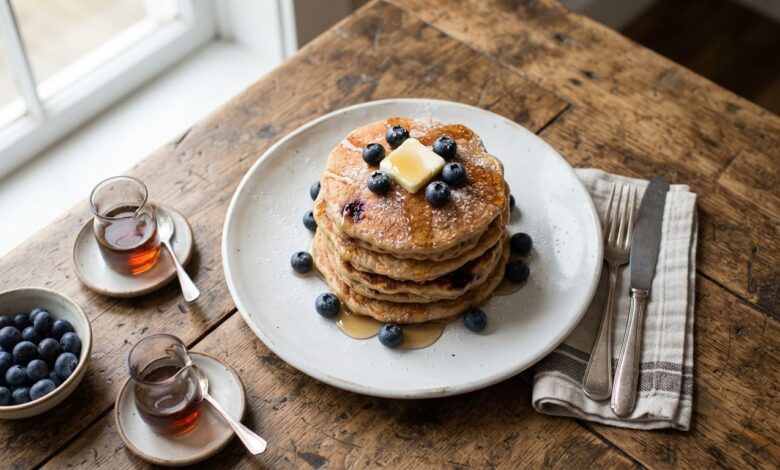
Almond Flour Pancakes (Fluffy, Gluten-Free + Sugar-Free Option)
These almond flour pancakes are naturally gluten-free and grain-free, with a soft, slightly nutty crumb and golden edges. The batter comes together in one bowl in about 5 minutes and makes roughly 10 pancakes (3½ inches / 9 cm). They are a little more delicate than wheat pancakes, so the recipe below is built to make them easy to flip: a spoonful of tapioca starch, a short rest and a lower heat than you might expect.
Quick facts: prep 5 minutes · rest 5 minutes · cook 15 minutes · yield about 10 pancakes (serves 3) · griddle medium-low, about 325°F (165°C) · naturally gluten-free · sugar-free option with no other changes.
Do Almond Flour Pancakes Work? What to Expect
Yes — but they behave differently from regular pancakes. Almond flour has no gluten, so there is no stretchy network to trap air and hold the pancake together. Eggs do that job instead. The result is a pancake that is tender and moist rather than bouncy, a little denser than a diner stack, and richer because almonds bring their own fat. They brown faster than wheat pancakes (almond flour contains natural sugars and protein that color quickly), which is why you cook them lower and slower.
Ingredients (Cups and Grams)
- 1 1/2 cups (168 g) blanched, finely ground almond flour — spoon and level, or weigh
- 1 tablespoon (8 g) tapioca starch (or arrowroot) — optional but makes flipping much easier
- 1 1/2 teaspoons (6 g) baking powder — use a gluten-free brand
- 1/4 teaspoon (1.5 g) fine salt
- 3 large eggs (about 150 g out of the shell), room temperature
- 1/3 cup (80 ml) milk or unsweetened almond milk
- 1 tablespoon sweetener: 12 g granulated sugar, 15 ml maple syrup, or 12 g granulated erythritol blend / allulose for sugar-free
- 2 tablespoons (28 g) melted butter or neutral oil, plus more for the pan
- 1 teaspoon (5 ml) vanilla extract
- Optional: 1/2 teaspoon cinnamon
Equipment: a large nonstick skillet or griddle, a thin flexible spatula, and a 1/4-cup (60 ml) measure or scoop.
How to Make Almond Flour Pancakes
- Mix the dry ingredients. In a medium bowl whisk the almond flour, tapioca starch, baking powder, salt and cinnamon. Break up any almond flour lumps with the whisk or your fingers.
- Add the wet ingredients. Add the eggs, milk, sweetener, melted butter and vanilla. Whisk until smooth, about 30 seconds. The batter should be thick but pourable, like thick yogurt.
- Rest 5 minutes. The almond flour and starch absorb liquid and the batter thickens slightly. If it is too thick to spread a little on its own after resting, add milk 1 tablespoon at a time.
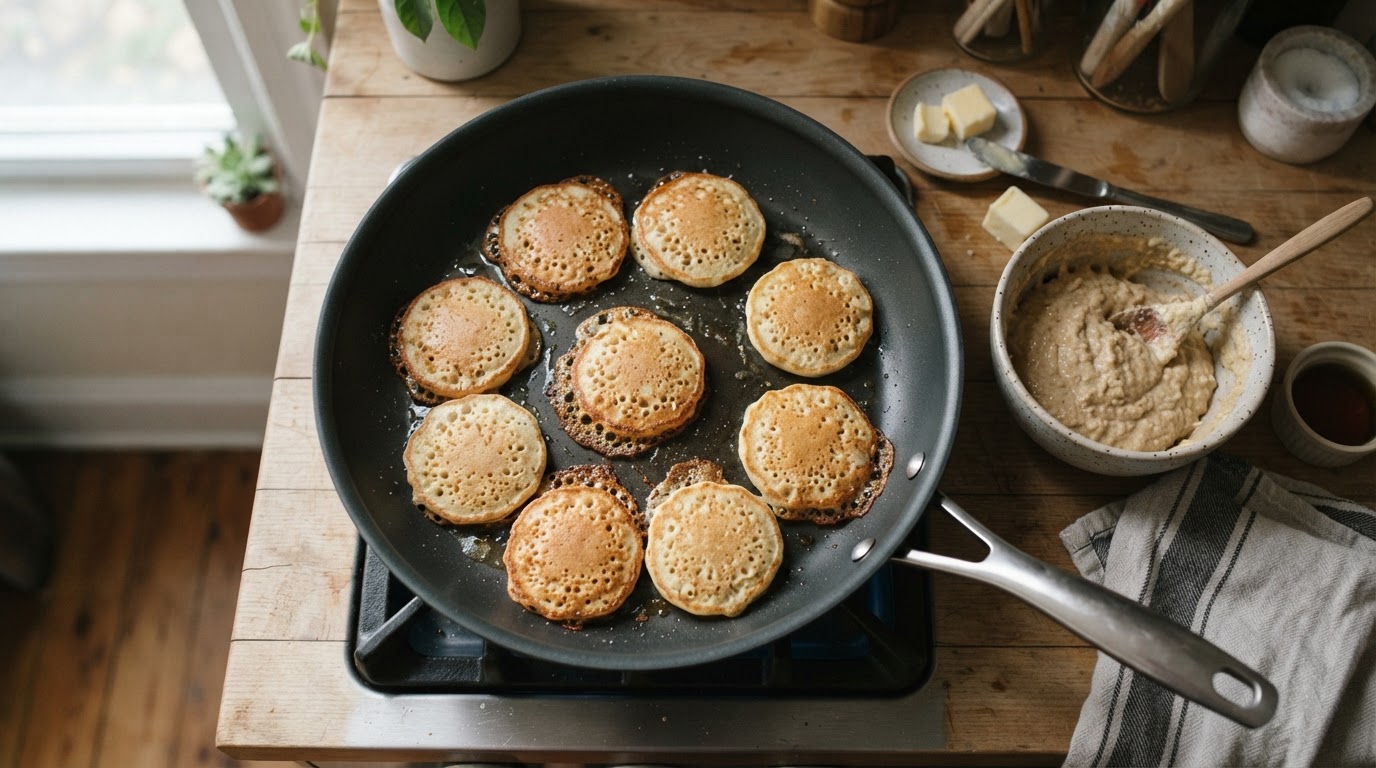
- Heat the pan. Heat the skillet over medium-low (an electric griddle at about 325°F / 165°C) and brush lightly with butter or oil. A drop of water should sizzle gently, not dance and vanish instantly.
- Cook the first side. Pour scant 1/4-cup (about 50 ml) portions and nudge each into a 3½-inch (9 cm) round. Cook 2–3 minutes, until the edges look set and matte and a few bubbles appear on top. Almond flour pancakes bubble less than wheat ones, so watch the edges rather than waiting for big bubbles.
- Flip once. Slide a thin spatula fully under the pancake and flip in one quick motion. Cook 1½–2 minutes more until golden and the center springs back.
- Keep warm. Hold finished pancakes on a rack in a 200°F (95°C) oven while you cook the rest, re-greasing the pan between batches.
Why These Gluten-Free Swaps Work
| Ingredient | What it does | Texture you get |
|---|---|---|
| Blanched almond flour | Replaces wheat flour; brings protein and fat, no gluten | Tender, moist, slightly nutty; browns faster |
| 3 eggs (more than usual) | Egg proteins set with heat and hold the pancake together in place of gluten | Pancakes that flip without breaking |
| Tapioca starch | Gelatinizes when cooked and binds the crumb | Less crumbly, a little more chew |
| Baking powder | Releases gas in the pan for lift | Lighter, fluffier middle |
| Low heat | Lets the inside cook before the outside over-browns | Even golden color, no raw center |
Use blanched, superfine almond flour, not almond meal. Almond meal is ground with the skins and is coarser; it makes heavier, grainier pancakes that fall apart more easily. If almond meal is all you have, add an extra tablespoon of tapioca starch and keep the pancakes small. For more on how leaveners behave in grain-free batters, see our baking powder guide.
Sugar-Free and Keto-Friendly Almond Flour Pancakes
The batter only uses 1 tablespoon of sweetener, so going sugar-free does not change the method:
- Erythritol blend (1:1 with sugar): 12 g. Works well; at this small amount there is no noticeable cooling aftertaste.
- Allulose: 12 g. Browns faster than sugar — turn the heat down a notch and cook a little longer.
- Liquid stevia or monk fruit drops: a few drops in place of the granulated sweetener; nothing else changes.
- Toppings: butter, fresh berries, whipped cream, or a sugar-free syrup. Maple syrup adds the most sugar to a plate of these pancakes, so it is the place to cut back if you are watching sugar.
Made with an erythritol blend or allulose and unsweetened almond milk, these pancakes are lower in carbohydrates than wheat pancakes and fit many keto-style eating plans. Carb counts depend on the brands you use, so check your labels; if you manage blood sugar for medical reasons, follow your own healthcare provider’s advice. For powdered sweetener to dust on top, see how to make sugar-free powdered sugar.
3-Ingredient Almond Flour Pancakes
For a fast, no-added-sugar version: mash 1 medium ripe banana (about 100 g peeled), whisk in 2 large eggs, then stir in 3/4 cup (84 g) almond flour. Cook as above in 2-tablespoon portions — they are softer and more fragile than the main recipe, so keep them small (about 3 inches / 7.5 cm) and flip gently. Makes about 8. Add 1/2 teaspoon baking powder if you want more lift. The banana adds natural sugar, so this version is not sugar-free or keto.
Variations
- Blueberry almond flour pancakes: pour the batter, then drop 6–8 fresh or frozen (unthawed) blueberries onto each pancake before flipping. About 3/4 cup (110 g) for the batch. Stirring berries into the batter turns it purple and makes flipping harder.
- Chocolate chip: sprinkle 1/3 cup (55 g) mini chocolate chips (sugar-free if needed) onto the pancakes in the pan.
- Lemon: add the zest of 1 lemon and swap 1 tablespoon of the milk for lemon juice.
- Dairy-free: use almond or oat milk (check oats are certified gluten-free) and coconut oil or a neutral oil instead of butter.
- Egg-free (eggless): almond flour pancakes depend on eggs, so this version is more delicate. Replace the 3 eggs with 3 flax eggs (3 tablespoons / 21 g ground flaxseed + 9 tablespoons / 135 ml water, rested 10 minutes), increase tapioca starch to 3 tablespoons (24 g), and cook 2-tablespoon pancakes for 3–4 minutes on the first side. Expect a softer, denser pancake. See our egg substitutes guide for other options.
Sheet-Pan Almond Flour Pancakes (No Flipping)
To skip standing at the stove, make the full batter, increase the milk to 1/2 cup (120 ml), and spread it in a greased, parchment-lined 9×13-inch (23×33 cm) pan. Scatter berries on top if you like. Bake at 375°F (190°C) for 15–18 minutes, until golden at the edges and a toothpick comes out clean. Cut into 12 squares.
Troubleshooting
| Problem | Likely cause | Fix |
|---|---|---|
| Pancakes fall apart when flipped | Too large, flipped too soon, or no starch | Keep them 3½ inches or smaller, wait until the edges look dry, add the tapioca starch, use a thin wide spatula |
| Burnt outside, raw middle | Heat too high (almond flour browns fast) | Medium-low heat, about 325°F (165°C) on a griddle; cook a minute longer |
| Dense and flat | Old baking powder or batter too thick | Test baking powder in hot water (it should fizz); thin the batter with 1–2 tablespoons milk |
| Gritty or heavy | Almond meal instead of blanched almond flour | Use superfine blanched almond flour |
| Batter spreads too thin | Too much milk or flour measured light | Weigh the almond flour (168 g); add 1–2 tablespoons more almond flour |
| Sticking to the pan | Pan not greased between batches | Brush with butter or oil before each batch; a nonstick pan helps |
Storage, Freezing and Reheating
- Fridge: cool completely and store airtight for up to 4 days.
- Freezer: freeze in a single layer on a tray, then bag with parchment between them for up to 2 months.
- Reheat: toaster or toaster oven straight from frozen (1–2 cycles), a dry skillet over low heat, or 20–30 seconds in the microwave for 2 pancakes. The toaster keeps the edges crisp.
- Batter: best cooked within 30 minutes; baking powder loses lift if the batter sits overnight.
More Almond Flour and Gluten-Free Baking
If you like the flavor of almond flour, try our one-bowl almond flour cake, the gluten-free version of our banana bread for another make-ahead breakfast, or browse the full list of gluten-free dessert recipes.
Almond Flour Pancakes FAQ
Does almond flour work well for pancakes?
Yes. Blanched almond flour makes tender, moist pancakes with a mild nutty flavor. Because it has no gluten, the recipe uses more eggs than a regular pancake batter and a little tapioca starch to bind it, plus a lower heat so the pancakes cook through before they over-brown.
Why are my almond flour pancakes falling apart?
The most common reasons are pancakes that are too big, flipping before the edges have set, almond meal instead of fine almond flour, or not enough egg or starch. Make 3½-inch pancakes, wait until the edges look matte and dry (2–3 minutes), and flip with a thin spatula slid all the way underneath.
Can I make almond flour pancakes without eggs?
You can, but they are more fragile. Use 3 flax eggs, raise the tapioca starch to 3 tablespoons (24 g), make small pancakes and cook the first side longer, 3–4 minutes. The full method is in the Variations section above.
Are almond flour pancakes healthier than regular pancakes?
They are different rather than simply healthier. Almond flour pancakes are gluten-free and contain fewer carbohydrates and more protein, fat and fiber than pancakes made with wheat flour, but they are also higher in calories per pancake. Whether they suit you depends on your needs; toppings such as syrup often make a bigger difference to the sugar on your plate than the flour does.
Can I use almond flour instead of regular flour in my usual pancake recipe?
Not 1:1 without changes. Almond flour absorbs liquid differently and has no gluten, so a standard recipe made with it will be runny and break apart. Use a recipe written for almond flour like this one, with extra eggs and less milk. For other baking swaps, see our baking substitutes chart.