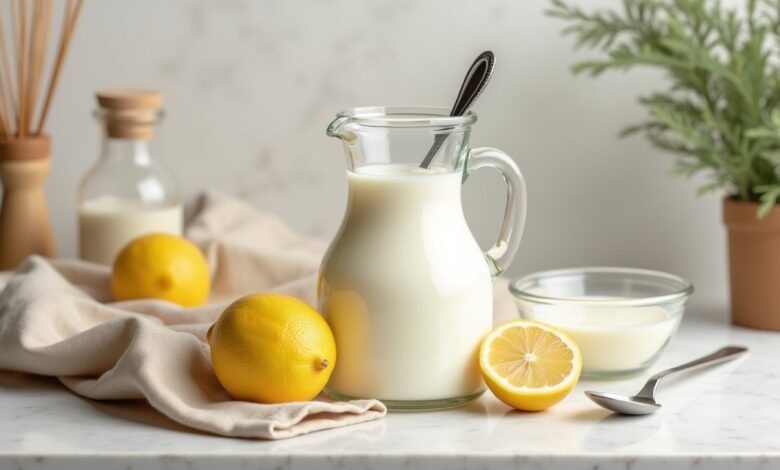
Buttermilk Substitute: Milk, Lemon Juice & Best Baking Alternatives
Need a buttermilk substitute while mixing cake, muffin, pancake or biscuit batter? You can make an easy milk-and-lemon-juice or milk-and-vinegar substitute in minutes, but it is not identical to thick cultured buttermilk. The best replacement depends on whether your recipe needs acidity, richness or a particular batter consistency.
Quick answer: For a practical one-cup substitute, put 1 tablespoon (15 ml) fresh lemon juice or plain white vinegar into a liquid measuring cup. Add milk up to the 1-cup (240 ml) mark, stir, and rest for 10 minutes. Use promptly in a recipe that tolerates a thinner alternative. For thick biscuits and tender cakes where texture is especially important, plain kefir or thinned yogurt is often closer to cultured buttermilk.
How to Make Buttermilk Substitute with Milk and Lemon Juice
- Add 1 tablespoon (15 ml) lemon juice to a clear liquid measuring cup.
- Pour in whole milk until the combined liquid reaches the 1-cup (240 ml) line; stir gently.
- Let stand for approximately 10 minutes. The milk may become slightly thickened or show tiny curds; this is expected.
- Stir once more and use the entire mixture in place of 1 cup of buttermilk in a compatible baking recipe.
You can use distilled white vinegar instead of lemon juice in the same amount. Don’t add a whole cup of milk on top of the tablespoon of acid if you need a precise one-cup finished volume. Both methods circulate online, but filling the measuring cup to its final line is easiest to reproduce.
Buttermilk Substitute Ratios: ¼, ½, ¾ and 1 Cup
| Buttermilk required | Lemon juice or white vinegar | Milk to add | Rest time |
|---|---|---|---|
| ¼ cup (60 ml) | ¾ tsp (3.75 ml) | Fill to ¼-cup line | 10 min |
| ½ cup (120 ml) | 1½ tsp (7.5 ml) | Fill to ½-cup line | 10 min |
| ¾ cup (180 ml) | 2¼ tsp (11.25 ml) | Fill to ¾-cup line | 10 min |
| 1 cup (240 ml) | 1 tbsp (15 ml) | Fill to 1-cup line | 10 min |
| 1½ cups (360 ml) | 1½ tbsp (22.5 ml) | Fill to 1½-cup line | 10 min |
These are scaled home-kitchen measurements: a tablespoon contains three teaspoons. If your measuring tools do not have a quarter-teaspoon marking, use the nearest accurately measured amount or a small metric measure. For larger batches or recipes where the texture is critical, choose real buttermilk or kefir rather than assuming homemade soured milk will perform identically.
Best Substitutes for Buttermilk in Baking
| Substitute | Starting amount for 1 cup buttermilk | Best use / limitation |
|---|---|---|
| Milk + lemon juice or white vinegar | 1 tbsp acid; milk to 1 cup | Convenient for many pancakes, muffins and quick breads; thinner than cultured buttermilk |
| Plain, unsweetened kefir | 1 cup (240 ml) | Often a closer cultured-dairy alternative for biscuits, cakes and pancakes; check flavor and thickness |
| Plain yogurt + milk | Begin with ¾ cup plain yogurt + ¼ cup milk | Provides both tang and body; whisk smooth, add milk gradually to match pourability |
| Sour cream + milk | Begin with ¾ cup sour cream + ¼ cup milk | Rich and tangy; may make thick batters heavier, adjust only as needed |
| Cultured buttermilk powder | Follow product package’s powder and water quantities | Useful pantry option; brands differ, so don’t invent one universal ratio |
The yogurt and sour cream amounts are starting blends, not universal one-for-one chemical matches. Depending on brand and consistency, add liquid gradually until the mixture pours similarly to the buttermilk your recipe expects.
Which Substitute Is Best for Cakes, Biscuits and Pancakes?
Cakes and cupcakes
Milk with lemon juice or vinegar is a practical emergency option for many home cakes, especially when the recipe includes baking soda. But a creamy tangy dairy product, such as kefir or diluted plain yogurt, may produce a closer texture in richer layer cakes. If a particular recipe specifies buttermilk for its characteristic flavor, use cultured buttermilk for the most predictable result.
Biscuits and scones
Cold, relatively thick cultured buttermilk helps make a cohesive dough. The thin milk-and-acid mixture can produce a wetter dough and change spread or lift. For flaky biscuits, prefer real buttermilk or plain kefir where possible. Add a thinner substitute gradually rather than pouring it all in before checking dough consistency.
Pancakes and waffles
For everyday pancakes, the acidified milk method often works when the recipe already includes baking soda. Some pancakes will be slightly thinner or less tangy than with cultured buttermilk. Let the batter rest only for the time the specific recipe recommends.
Muffins and quick breads
Soured milk can be a useful last-minute ingredient in quick breads and muffins. For moister or richer results, consider thinned yogurt if your batter’s original thickness matters. When troubleshooting rise or crumb, also check the freshness and amount of baking powder.
Why Buttermilk Matters in Baking
Modern cultured buttermilk is fermented dairy with a pleasantly acidic taste and a thicker body than milk. In a recipe that also contains baking soda, that acidity helps generate carbon dioxide for lift. Its milk proteins, moisture and consistency also influence batter structure. Adding acid to plain milk provides acidity, but it does not recreate all of cultured buttermilk’s viscosity or fermented flavor.
Baking powder is different: it already contains both the alkaline and acidic components required for its primary leavening reaction. That is one reason you should not casually remove or increase baking soda simply because you changed the buttermilk substitute.
Can You Make Dairy-Free Buttermilk Substitute?
For a dairy-free adaptation, place 1 tablespoon (15 ml) lemon juice or white vinegar in a measuring cup and top up to 1 cup (240 ml) with plain, unsweetened soy milk or another unflavored plant milk. Stir and let stand about 10 minutes. Some plant milks curdle visibly and others do not. Results differ because plant milks vary in protein, fat and additives. This is not a guaranteed replacement for every dairy-based recipe; confirm any recipe-specific substitution guidance and allergen labels.
Common Mistakes to Avoid
- Using sweetened or flavored milk: vanilla or sugar in flavored plant milk can noticeably change the recipe.
- Assuming every substitute has the same thickness: sour milk is generally thinner than cultured buttermilk.
- Waiting for dramatic curds: a slight texture change is enough; curdling varies with the milk and acid.
- Changing the baking soda amount by guesswork: follow the recipe’s leavening instructions unless the developer gives a tested alternative.
- Making too much ahead: mix the substitute when you are ready to bake, and do not treat added lemon juice as a safe way to preserve old milk.
Frequently Asked Questions
How much vinegar do I add to 1 cup of milk to make buttermilk substitute?
For a finished cup of substitute, add 1 tablespoon of plain white vinegar to a liquid measuring cup, then pour in milk to the 1-cup line. Rest for about 10 minutes.
Can I use apple cider vinegar instead of white vinegar?
Plain apple cider vinegar can work in many baked recipes, but it may contribute a mild fruity note. Avoid strongly flavored vinegars, such as balsamic vinegar.
Can I use milk on its own instead of buttermilk?
Sometimes, but not reliably for recipes with baking soda. Regular milk lacks the same acidity, so both rise and flavor may change. A substitute that supplies acidity is usually the safer starting point.
Does lemon juice really turn milk into buttermilk?
No. It makes acidified or soured milk, an approximation for some baking applications. Real cultured buttermilk is made through dairy fermentation.
What if I need 2 cups of buttermilk?
Use 2 tablespoons lemon juice or white vinegar and add milk up to the 2-cup mark in a suitable measuring jug. Mix and rest for about 10 minutes. Large or texture-sensitive recipes are better made with the buttermilk specified by the developer.
Is yogurt a better buttermilk substitute?
It can be, especially when thickness matters, as in some biscuits and cakes. Whisk plain, unsweetened yogurt with enough milk to make it pourable, then use in the amount the recipe requires. Brands differ, so the exact outcome is not guaranteed.
Related Baking Guides and Recipes
Learn how to make a cake flour substitute, or use the butter conversion chart when your recipe has US cup measurements. For recipes where buttermilk’s tang and acidity matter, explore red velvet cake with cream cheese frosting and the gluten-free biscuits guide, following each recipe’s own ingredient and liquid instructions.
Sources and Testing Note
This is a reference guide, not a report of recipe testing performed by SugerBakes. We cross-checked the conventional acid-to-milk method with King Arthur Baking’s buttermilk substitute advice and Sally’s Baking buttermilk substitute guide. For a discussion of why some replacements underperform in biscuits, see Serious Eats’ comparison. Since dairy, ingredient brands and mixing techniques vary, follow recipe-specific instructions when available.