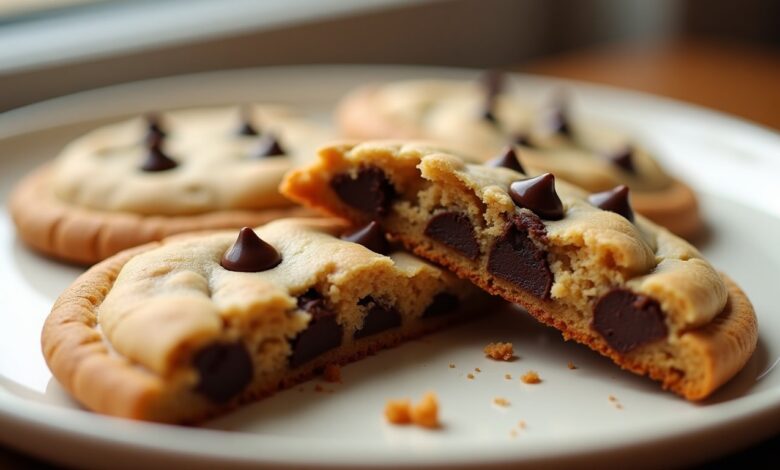
Brown Sugar Chocolate Chip Cookies: Soft and Chewy Recipe
If you want chewy centers, gently crisp edges, and a warm toffee-like flavor, these brown sugar chocolate chip cookies are a rewarding place to start. Brown sugar holds moisture in the dough and contributes caramel notes, while a little white sugar helps the edges set. This recipe uses softened butter, so you can bake the cookies without a required chill.
At a glance: Prep around 15 minutes · Bake 10–12 minutes per tray · Yield about 20–24 cookies, depending on scoop size · Oven 350°F (175°C).
Ingredients for brown sugar chocolate chip cookies
- 1½ sticks (170 g) unsalted butter, softened but not melted
- 1 cup packed (200 g) light brown sugar
- ¼ cup (50 g) granulated sugar
- 1 large egg plus 1 egg yolk, room temperature
- 2 teaspoons vanilla extract
- 2 cups plus 1 tablespoon (250 g) all-purpose flour, weighed
- ¾ teaspoon baking soda
- ½ teaspoon fine salt
- 1 cup (170 g) semisweet chocolate chips or chopped chocolate
Dark brown sugar gives a stronger molasses flavor and slightly darker cookies; light brown sugar yields a balanced result. If your butter is very warm or the dough looks greasy, chill for 20–30 minutes before baking.
How to make chewy brown sugar chocolate chip cookies
Step 1: Preheat the oven
Preheat to 350°F (175°C). Line two large baking sheets with parchment paper. Place oven racks near the center; for even browning, bake one sheet at a time.
Step 2: Cream butter and both sugars
Beat softened butter, brown sugar, and granulated sugar for 2–3 minutes until creamy and slightly lighter. Scrape the sides of the bowl as you mix.
Step 3: Add the egg, yolk, and vanilla
Beat in one whole egg, the extra yolk, and vanilla until incorporated. The extra yolk enriches the dough and contributes to its chewy texture.
Step 4: Combine the dry ingredients
Whisk flour, baking soda, and salt separately. Add to the wet mixture on low speed and mix only until no dry streaks remain.
Step 5: Fold in chocolate chips
Use a spatula to stir through the chocolate chips or chopped chocolate, reserving a few pieces to press onto the tops before baking.
Step 6: Scoop and space the dough
Scoop roughly 2 tablespoons of dough per cookie and space the portions at least 2 inches apart. If the dough is unusually soft, refrigerate it briefly so the cookies do not spread excessively.
Step 7: Bake until edges are golden
Bake for about 10–12 minutes. The edges should look set and lightly golden, while the centers may still look soft. Rotate the sheet partway through if your oven browns unevenly.
Step 8: Rest before moving
Leave cookies on the hot tray for about 5 minutes to finish setting, then transfer carefully to a wire rack. They firm up as they cool.
What does brown sugar do in cookies?
Brown sugar contains some molasses and typically retains more moisture than plain white sugar. That helps create a tender, chewy interior and deeper caramel notes. White sugar still matters here because it contributes to spread and crispness around the edges.
How to get soft centers and crisp edges
- Weigh the flour: too much flour makes the dough stiff and cakey.
- Start with softened butter rather than melted butter for a more predictable no-chill dough.
- Avoid overmixing once the flour goes in.
- Pull the cookies out when the centers are still slightly soft.
- Rest them briefly on the tray so they finish setting without drying out.
Flavor variations
- Chocolate chunks: swap chips for chopped dark chocolate for bigger molten pockets.
- Sea-salt finish: sprinkle a few flakes onto warm cookies.
- Walnut version: replace a quarter of the chocolate with chopped toasted walnuts.
- Cinnamon touch: add ¼ teaspoon ground cinnamon with the flour.
- Double chocolate: use a separately formulated cocoa cookie recipe rather than simply adding a large amount of cocoa to this dough.
Troubleshooting cookies that spread or turn out dry
My cookies spread too much
Butter may have been too warm, dough may have been undermeasured, or the tray was hot. Use cooler baking sheets, weigh flour, and chill dough briefly when necessary.
My cookies are puffy and cakey
Extra flour, overbeating after the eggs, or underbaking can alter texture. Measure accurately and do not add flour until the dough feels dry.
My cookies are hard
The tray may have stayed in the oven too long. Remove cookies when the edges are done and the centers are still slightly soft; they set further as they cool.
Storage and freezing
Keep completely cooled cookies in an airtight container at room temperature for about 3–4 days, away from heat. Freeze baked cookies for up to 2 months. Portion raw dough onto a tray, freeze solid, then transfer to a sealed freezer bag; bake frozen portions with a few additional minutes, checking the centers for doneness.
Frequently asked questions
Can I use only brown sugar?
Yes, but using all brown sugar changes spread and texture. This version balances a larger amount of brown sugar with a little granulated sugar for chewy middles and defined edges.
Do I have to chill the dough?
Not with properly softened butter and accurately measured flour, although a short chill can help if the kitchen is hot or the dough feels too soft.
Can I use milk chocolate chips?
Absolutely. Milk chocolate makes the cookies sweeter. Dark or semisweet chocolate provides more contrast against the sugary dough.
Can I replace butter with oil?
Not as a direct swap in this specific creaming-method recipe: oil behaves differently and creates a more spread-out dough.
More cookie recipes
For deeper nutty caramel flavor, try brown butter chocolate chip cookies. For a different approach, see our easy shortbread cookies or classic sugar cookies. If you’re out of eggs, try these soft chocolate chip cookies without eggs.