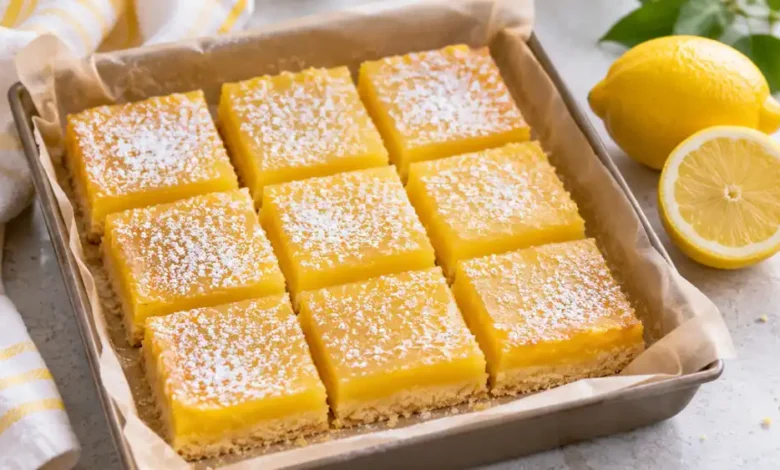
Sugar-Free Lemon Bars with Almond Flour Crust
These sugar-free lemon bars combine a tender almond-flour shortbread-style crust with a bright, tangy lemon custard. They are naturally gluten-free when every ingredient is certified or verified gluten-free, and use a baking sweetener instead of added granulated sugar. Bake the crust first, then bake the lemon layer gently and chill thoroughly for neat squares.
At a glance: 8-inch (20-cm) square pan • 16 small bars • Prep 20 minutes • Crust bake 12–15 minutes • Filling bake 18–24 minutes • Chill at least 3 hours. These are home-kitchen guidelines, not a claim that the recipe has been laboratory tested.
What makes these lemon bars different?
The almond flour base tastes nutty and buttery without requiring wheat flour, while the filling gets its tang from real lemon juice and fresh zest. Powdered sweetener dissolves more evenly than coarse granules, although the final texture varies by sweetener brand. Because almond flour contains more natural oil than wheat flour, pressing the crumb mixture firmly and prebaking it are especially helpful.
If you are new to almond flour crusts, our gluten-free almond flour cheesecake crust guide explains why press-in doughs behave differently from wheat-flour pastry.
Ingredients (US cups and grams)
Almond flour crust
- 1¾ cups (175 g) fine blanched almond flour, spooned into the cup and leveled
- 5 tablespoons (70 g) unsalted butter, melted and slightly cooled
- 3 tablespoons (about 25–35 g) powdered sugar-free baking sweetener; gram weights differ considerably between products, so use the package’s equivalent for roughly 3 tablespoons sugar
- ¼ teaspoon fine salt
- ½ teaspoon vanilla extract (optional)
Fresh lemon filling
- 4 large eggs, at room temperature (about 200 g without shells)
- ½ cup (120 ml) fresh lemon juice, strained
- 1 tablespoon finely grated lemon zest, yellow part only
- ½ cup (amount in grams varies by brand) powdered 1:1 sugar-replacement sweetener; adjust to taste using your product’s sugar-equivalence directions
- 1 tablespoon (8 g) cornstarch, certified gluten-free when necessary; optional, but it helps the custard slice cleanly
- Pinch of fine salt
- A little powdered sugar-free sweetener to dust after chilling, optional
Sweetener note: Some allulose products are less sweet by volume than sugar, while concentrated monk-fruit or stevia blends vary widely. Do not use a pure concentrated extract measure-for-measure. Check your sweetener’s baking conversion and adjust before mixing. Use powdered sweetener for a smoother finish. The bars contain naturally occurring sugars from lemon and almonds even though no table sugar is added.
How to make sugar-free lemon bars
- Prepare your pan and oven. Heat the oven to 325°F (165°C). Line an 8-inch (20-cm) metal square pan with parchment, leaving two handles of overhang. Use a light-colored pan if possible; dark pans can brown almond flour faster.
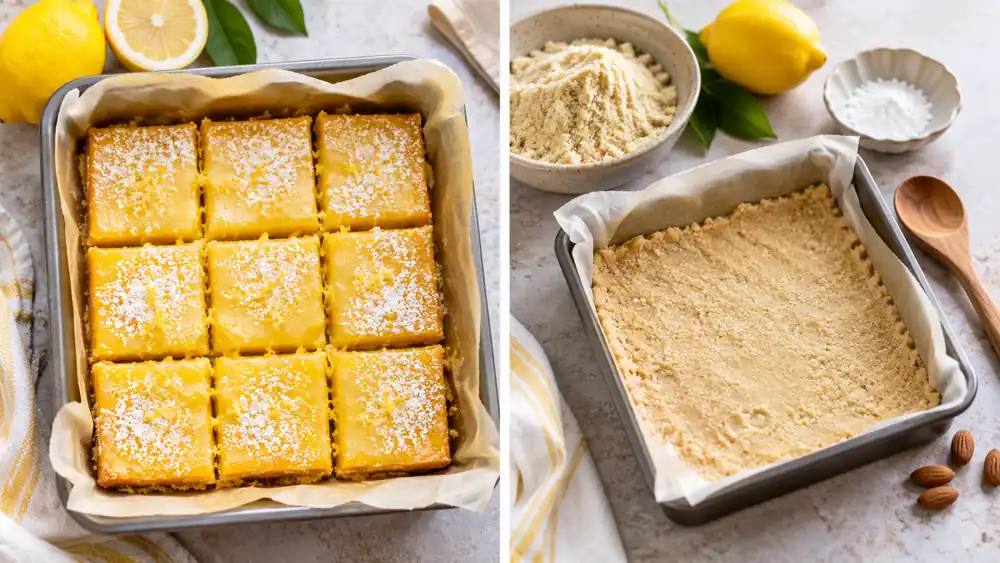
- Mix the crust. Stir almond flour, powdered sweetener and salt until evenly combined. Add melted butter and vanilla, then mix until the crumbs hold together when pressed between your fingers.
- Press and prebake. Firmly press the mixture into an even layer, including the corners. Bake 12–15 minutes until the edges begin turning light gold. Remove from the oven, but keep the oven on.
- Mix the filling. Whisk the eggs just until uniform; excessive aeration can produce bubbles. Whisk in the lemon juice, zest, powdered sweetener and salt. If using cornstarch, whisk it into a small amount of the lemon juice first to remove lumps, then combine.
- Pour gently. Place the warm crust on a flat oven rack or baking sheet and slowly pour the lemon mixture on top. Do not press into the crust. If bubbles gather on the surface, pop them with the tip of a clean spoon.
- Bake until barely set. Return the pan to the oven for 18–24 minutes. The edges should be set while the center retains a very slight wobble when you nudge the pan. Oven and pan differences matter; avoid baking until the top is dry and cracked.
- Cool and chill. Leave the pan undisturbed on a rack until no longer hot, then refrigerate promptly. Chill at least 3 hours, preferably until fully firm. Lift out by the parchment handles and cut with a sharp knife, wiping the blade between slices. Add an optional light dusting of powdered sweetener just before serving.
Why this swap works
| Swap | Purpose | What to expect |
| Fine almond flour instead of wheat flour | Keeps the crust wheat-free while providing body and a tender crumb | More delicate and slightly nuttier than traditional shortbread |
| Powdered sugar-free sweetener | Sweetens without adding granulated sugar and blends into the custard | Texture and sweetness depend on brand; some blends can recrystallize after chilling |
| Whole eggs | Help the lemon layer coagulate and hold together | Gentle baking reduces a rubbery or cracked surface |
| Optional cornstarch | Improves clean slicing, especially with liquid sweeteners | Adds a small amount of carbohydrate; omit if avoiding starch, but expect a softer custard |
The exact grams-per-cup of almond flour and the sweetener’s relative sweetness can differ. For the most consistent repeatable result, weigh the almond flour and stick to one sweetener product. This is a wheat-free, no-added-sugar style recipe, not a guaranteed ketogenic or diabetes-specific formula. If you need a specific nutrition target, calculate it from the brands you use.
Troubleshooting: soft filling, soggy crust and grainy texture
| Problem | Likely reason | What to change next time |
| Bars will not cut neatly | Insufficient chill time, underbaked filling, or omission of optional starch | Chill overnight and assess the barely-set bake point |
| Soggy bottom crust | Too little prebaking or loose crumb packing | Press tightly and wait for lightly golden edges before pouring filling |
| Cracked lemon layer | High heat or overbaking | Use 325°F / 165°C and remove while the center barely jiggles |
| Gritty or crystallized sweetener | Large sweetener crystals or recrystallization during cooling | Use a fine powdered baking blend and follow brand-specific conversion |
| Bitter lemon taste | White pith grated into zest or too much zest | Grate just the thin yellow peel; measure juice precisely |
Ingredient and pan variations
- Dairy-free: Use a firm dairy-free baking fat intended to replace butter in equal volume; this changes flavor and may change how the crust holds together. Coconut oil can make the crust feel firmer once chilled.
- Less tart: Increase sweetener slightly according to the product’s conversion guidance rather than reducing lemon juice so much that the filling sets differently.
- No cornstarch: The recipe can be prepared without it, though the slices may be more delicate and need extra chilling. Do not claim this modification is carb-free because almonds and lemon still supply carbohydrates.
- 9-inch pan: The same batch bakes into thinner bars. Start checking early, and expect less dramatic layers; the 8-inch pan is preferable.
- Different sweeteners: Powdered erythritol blends can taste cooler and sometimes become gritty after chilling; allulose may brown faster. Avoid switching a full-volume blend for pure monk-fruit extract.
Storage and make-ahead
Once cooled, keep these egg-based custard bars covered in the refrigerator. For best texture, eat within about 3–4 days. Avoid leaving perishable bars at room temperature for more than two hours. You can freeze tightly wrapped individual portions for approximately one month for quality, then thaw overnight in the fridge; the lemon filling may release a little moisture after thawing. These are conservative kitchen-handling guidelines rather than a tested commercial shelf-life.
Frequently asked questions
Can I make lemon bars without regular sugar?
Yes. A baking sweetener blended for roughly 1:1 sugar replacement can make a no-added-sugar lemon filling, but different blends have different weights, sweetness and browning characteristics. Read the label before measuring.
Why are my sugar-free lemon bars runny after baking?
The custard may have been underbaked or cut before fully chilled. Let the edges set in the oven, cool safely, then refrigerate for at least three hours. The optional gluten-free cornstarch helps produce firmer squares.
Is almond flour crust naturally gluten-free?
Pure almond flour does not contain wheat gluten, but check the packaging for cross-contact statements if you need strict gluten avoidance. Also check the starch, sweetener and other packaged ingredients.
How do I keep the lemon layer from soaking into the crust?
Prebake the crust and pack it evenly. Mix the custard only when you are ready to pour it onto the warm crust, then bake without delay.
Can you freeze sugar-free lemon bars?
Yes, tightly wrap fully chilled portions, freeze them, and thaw in the refrigerator. Freezing is convenient for make-ahead desserts, but the filling texture may be a little less smooth after thawing.
More gluten-free, low-sugar baking
If you enjoy this combination of citrus and almond flour, try our almond flour lemon cake with a sugar-free option, or compare this crust with the press-in method in our almond flour cheesecake crust. For alternative sweeteners and flour swaps, see the baking substitutes chart.
Further reading and recipe guidance
For another published approach to low-sugar lemon bars, see NOW Foods: Healthy Low Sugar Lemon Bars. This SugerBakes version uses its own quantities and step sequence; the recipe has not been presented as personally tested or as medical advice.